 17 min read
Yoga for beginners: a complete guide to starting in 2026
 Equipo TriwellMarch 2, 202617 min
<p>Few practices have shown as many benefits with such a low barrier to entry as yoga. You don’t need a gym, expensive equipment, or—most importantly—<strong>you don’t need to be flexible to start</strong>—that’s like saying you need to be clean to take a shower.</p>
<p>If you’ve been thinking about trying yoga but aren’t sure where to start, this guide is for you. We’re going to demystify the practice, give you the tools you need, and—most importantly—make sure you can do your first session today.</p>
<h2>What is yoga, really?</h2>
<p>Yoga is an ancient discipline that originated in India over 5,000 years ago. But forget the mystical image for a moment: at its core, yoga is an <strong>integrated system of movement, breath, and mindful attention</strong> that works body and mind simultaneously.</p>
<p>The word "yoga" comes from the Sanskrit <em>yuj</em>, which means "to unite"—the union of body, mind, and breath. In modern practice, this translates to three fundamental pillars:</p>
<ul> <li><strong>Asanas:</strong> The physical postures that strengthen, stretch, and balance the body.</li> <li><strong>Pranayama:</strong> Conscious breathing techniques that regulate the nervous system.</li> <li><strong>Meditation/Mindfulness:</strong> The ability to be present and observe without judging.</li> </ul>
<p>What makes yoga unique compared to other forms of exercise is precisely this integration. You’re not just moving your body: you’re <strong>training your capacity for attention, emotional regulation, and inner connection</strong>.</p>
<h2>What science says: proven benefits of yoga</h2>
<p>If anyone ever tells you yoga’s benefits are "just anecdotal," recent scientific research has something to say about that.</p>
<h3>Reduction of stress and anxiety</h3>
<p>A meta-analysis published in <em>Frontiers in Psychology</em> (2026) reviewed multiple studies and concluded that yoga <strong>significantly reduces perceived stress levels and symptoms of anxiety</strong>, with effects that increase as practitioners grow older. Three independent studies published in 2024 confirmed that even short yoga sessions improve markers of psychological well-being.</p>
<h3>Reduction of inflammation</h3>
<p>A systematic review published in <em>PubMed Central</em> showed that regular yoga practice is associated with <strong>reducing pro-inflammatory markers such as IL-6, TNF-alpha, and IL-1beta</strong>. This has huge implications for the prevention of chronic diseases, from arthritis to cardiovascular illnesses.</p>
<h3>Improved flexibility and strength</h3>
<p>It may sound obvious, but the numbers are impressive: studies show that <strong>8 weeks of regular yoga can improve flexibility by 15% to 35%</strong>, depending on the area of the body. And it’s not just stretching: postures like plank, warrior, and downward dog are functional strength exercises that work multiple muscle groups simultaneously.</p>
<h3>Improved sleep</h3>
<p>The Australian government’s review of evidence on natural therapies (2024) found that yoga has positive effects on sleep quality, especially in people with insomnia. The combination of gentle movement and breath regulation prepares the body for deeper, more restorative rest.</p>
<h3>Cardiovascular health</h3>
<p>Multiple studies link regular yoga practice with <strong>reduced blood pressure, resting heart rate, and LDL cholesterol levels</strong>. This is a cumulative benefit that turns yoga into your heart’s silent ally over time.</p>
<h2>Types of yoga: which is best to start?</h2>
<p>There are many styles of yoga, and choosing the right one can mean the difference between falling in love with the practice or quitting after a week. Here are the most relevant for beginners:</p>
<h3>Hatha Yoga — The classic to start</h3> <p>Hatha is the most traditional style and therefore the most recommended for beginners. Postures are held for several breaths, the pace is slow, and there’s time to understand each position. <strong>If you only try one style, make it this one.</strong></p>
<h3>Vinyasa Yoga — Fluid and dynamic</h3> <p>Vinyasa links postures with the breath in flowing sequences. It’s more dynamic than Hatha and will make you sweat. Ideal if you’re coming from the fitness world and want something that combines movement with mindfulness. Start with classes labeled "Gentle Vinyasa" or "Level 1".</p>
<h3>Yin Yoga — Deep and restorative</h3> <p>Yin holds passive postures for 3-5 minutes, working the deep connective tissues. It’s perfect for complementing intense workouts or for people with lots of accumulated tension. Don’t be fooled by its apparent gentleness: <strong>five minutes in a hip posture can be more intense than any HIIT</strong>.</p>
<h3>Restorative Yoga — Active rest</h3> <p>Uses props (blankets, blocks, bolsters) to hold postures in complete relaxation. It’s therapeutic and perfect if your main goal is stress reduction. It might seem like "doing nothing," but your nervous system will be deeply grateful.</p>
<h3>Ashtanga Yoga — For the athletic</h3> <p>A fixed series of progressive postures always performed in the same order. It’s demanding and structured. <strong>Not recommended as a first experience</strong>, but an excellent goal once you’ve mastered the basics.</p>
<h2>10 essential postures for beginners</h2>
<p>These are the postures that form the foundation of nearly every yoga class. Master them and you’ll have the basis for your entire practice:</p>
<h3>1. Tadasana (Mountain Pose)</h3> <p>Standing, feet together or hip-width apart. Arms at your sides, shoulders relaxed, crown reaching to the sky. Seems simple—and it is—but it teaches the <strong>fundamental alignment</strong> you’ll use in every other posture. Hold for 5-10 breaths.</p>
<h3>2. Adho Mukha Svanasana (Downward Facing Dog)</h3> <p>The star pose of yoga. Form an inverted V with your body. Hands shoulder-width apart, feet hip-width apart. It’s okay if your heels don’t touch the ground—<strong>they will with time</strong>. Works shoulders, back, hamstrings, and calves. Hold for 5-8 breaths.</p>
<h3>3. Virabhadrasana I (Warrior I)</h3> <p>Front foot pointing forward, back foot at 45°. Front knee over the ankle, arms extended overhead. This posture <strong>strengthens your quads, glutes, and core</strong> while opening the hips. Hold for 5 breaths on each side.</p>
<h3>4. Virabhadrasana II (Warrior II)</h3> <p>Similar to Warrior I, but with arms extended parallel to the ground and gaze over your front hand. Works legs, arms, and <strong>improves balance and focus</strong>. Hold for 5 breaths each side.</p>
<h3>5. Balasana (Child’s Pose)</h3> <p>Kneeling, sit back on your heels and stretch your arms forward with your forehead on the floor. This is your <strong>refuge pose</strong>: whenever you need to rest during practice, you can always come back here. It’s not giving up, it’s listening to your body.</p>
<h3>6. Bhujangasana (Cobra)</h3> <p>Lying face down, hands under shoulders, lift your chest while keeping your hips on the ground. <strong>Strengthens the lower back and opens the chest</strong>. Be careful: the lift comes from the back muscles, not from pushing with the arms. Hold 3-5 breaths.</p>
<h3>7. Vrikshasana (Tree Pose)</h3> <p>Standing, place the sole of one foot on the inside of the opposite thigh or calf (never on the knee). Hands at your chest or overhead. The <strong>classic balance pose</strong>. If you wobble, that’s yoga working. Hold 5-8 breaths each side.</p>
<h3>8. Setu Bandhasana (Bridge Pose)</h3> <p>Lying on your back, feet flat on the floor, lift your hips. Works the <strong>glutes, hamstrings, and opens the chest</strong>. Excellent for counteracting hours of sitting. Hold 5-8 breaths.</p>
<h3>9. Marjaryasana-Bitilasana (Cat-Cow)</h3> <p>On all fours, alternate between arching your back up (cat) and dipping it down (cow), syncing with your breath. <strong>The best way to warm up and mobilize the spine</strong>. Do 8-10 slow repetitions.</p>
<h3>10. Savasana (Corpse Pose)</h3> <p>Lying on your back, arms and legs relaxed, eyes closed. It seems like the easiest pose, but for many it’s the hardest: it requires <strong>completely letting go and simply being</strong>. Never skip Savasana—it’s where your body integrates all the work. Minimum 5 minutes.</p>
<h2>Your first routine: 20 minutes to start today</h2>
<p>You don’t need an hour. You don’t need a pretty studio. With 20 minutes and a mat (or a towel), you can do your first session right now:</p>
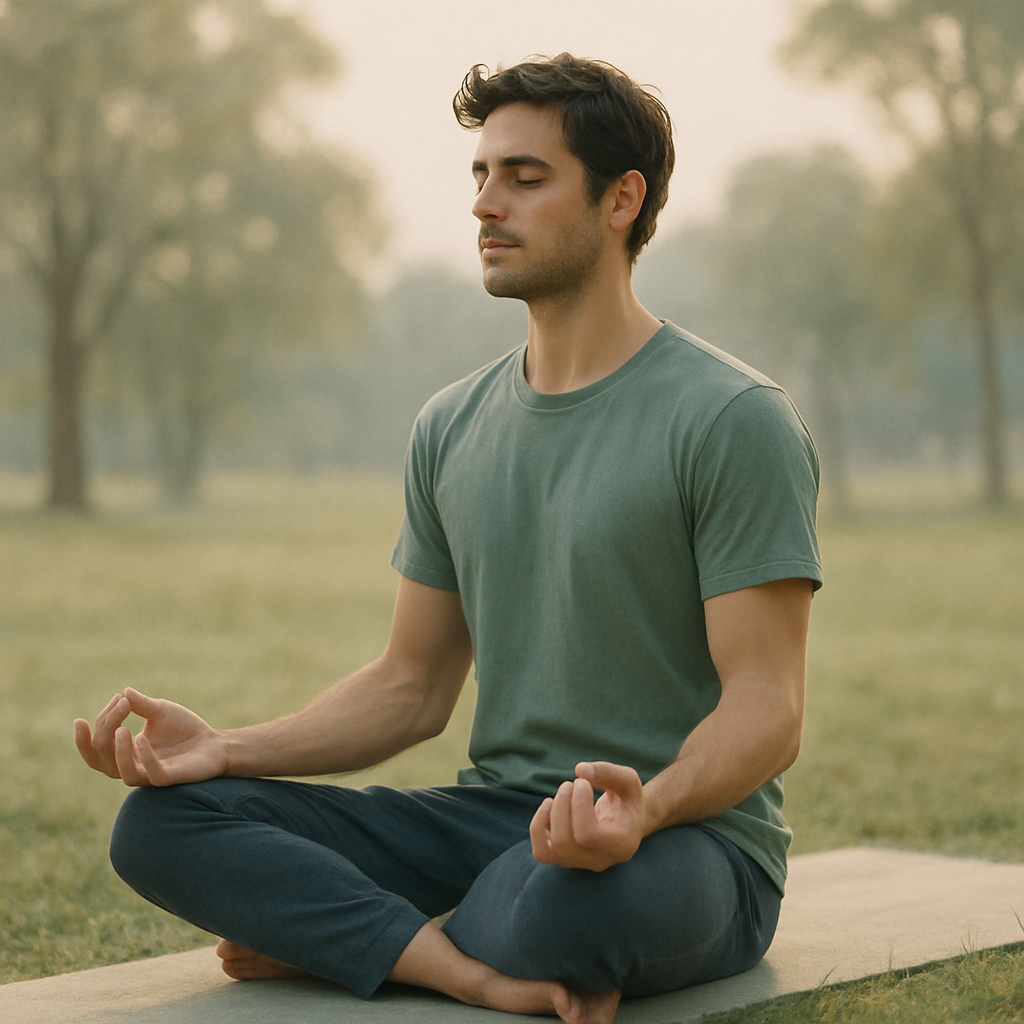
<ol> <li><strong>Conscious breathing</strong> (2 min): Sit comfortably, close your eyes, and take 10 deep breaths. Inhale for a count of 4, exhale for a count of 6.</li> <li><strong>Cat-Cow</strong> (2 min): 8-10 slow reps to wake up your spine.</li> <li><strong>Downward Facing Dog</strong> (1 min): Hold, gently pedal your feet.</li> <li><strong>Warrior I</strong> (2 min): 5 breaths each side.</li> <li><strong>Warrior II</strong> (2 min): 5 breaths each side.</li> <li><strong>Tree Pose</strong> (2 min): 5 breaths each side. It’s okay to wobble.</li> <li><strong>Cobra</strong> (1 min): 3 reps of 3-5 breaths each.</li> <li><strong>Bridge</strong> (2 min): 3 reps of 5 breaths.</li> <li><strong>Child’s Pose</strong> (2 min): Rest and breathe.</li> <li><strong>Savasana</strong> (4 min): Lying down, fully relaxed. Don’t skip this.</li> </ol>
<p><strong>Tip:</strong> Use a soft timer for Savasana. Falling asleep the first few times is normal—it means your body needed that rest.</p>
<h2>Common mistakes every beginner makes (and how to avoid them)</h2>
<h3>1. Comparing yourself to others</h3> <p>There’s no competition in yoga. The person next to you doing a perfect pose has been practicing for years. Your only reference is yourself, yesterday. <strong>Progress in yoga is personal and not linear.</strong></p>
<h3>2. Forcing postures</h3> <p>There’s a crucial difference between <em>discomfort</em> (the feeling of stretching) and <em>pain</em> (your body’s alarm signal). The former is welcome; the latter never is. If it hurts, back off. <strong>Yoga teaches you to listen to your body, not ignore it.</strong></p>
<h3>3. Forgetting to breathe</h3> <p>Breathing is 50% of yoga. If you’re holding your breath in a pose, you’re missing half the practice. <strong>When a pose gets hard, breathe deeper, not faster.</strong></p>
<h3>4. Wanting instant results</h3> <p>You’re not going to touch your toes the first week. Or the second. And that’s okay. The deepest benefits of yoga—emotional regulation, stress resilience, inner calm—<strong>are built session by session, like compound interest for your well-being</strong>.</p>
<h3>5. Skipping Savasana</h3> <p>Many beginners see Savasana as "a waste of time." Mistake. It’s the integration moment where your nervous system processes all the work. <strong>Skipping Savasana is like baking a cake and taking it out before it’s done.</strong></p>
<h2>Minimum equipment: what you really need</h2>
<ul> <li><strong>Yoga mat (essential):</strong> Invest in one with a good grip. You don’t need the most expensive, but avoid those less than 4mm thick. Your knees will thank you.</li> <li><strong>Blocks (highly recommended):</strong> Two foam blocks help adapt poses when flexibility isn’t there yet. They’re cheap and make a big difference.</li> <li><strong>Strap or belt (useful):</strong> For poses where you can’t reach your feet or clasp hands behind your back. Any belt will do.</li> <li><strong>Comfortable clothing:</strong> Stretchy, breathable, and not distracting. You don’t need branded gear—just clothes that let you move.</li> </ul>
<h2>How to build the habit: from "I’ll try" to "I can’t live without it"</h2>
<p>Habit science says consistency matters more than intensity. Here are evidence-based strategies to make yoga stick in your life:</p>
<h3>Start ridiculously small</h3> <p>Forget about 90-minute sessions. Start with 10-15 minutes, 3 times a week. Once the habit is set, duration adjusts on its own. <strong>Better to do 10 minutes every day than 60 minutes once and then quit.</strong></p>
<h3>Anchor the habit to another routine</h3> <p>After [a routine you already have] → do yoga. After breakfast, after getting home from work, before bed. Linking a new habit to an existing one multiplies your chances of success.</p>
<h3>Eliminate friction</h3> <p>Leave your mat rolled out if you can. Keep your clothes ready. Pick a fixed spot at home. Every barrier you remove is one less "day I don’t practice."</p>
<h3>Celebrate just showing up</h3> <p>Some days you’ll have an amazing session; others, you’ll barely move. Both count. <strong>Success in yoga is unrolling your mat. Everything else is a bonus.</strong></p>
<h2>Yoga and technology: your practice in 2026</h2>
<p>Technology can be a great ally for your yoga practice, especially at the beginning:</p>
<ul> <li><strong>Guided yoga apps:</strong> Apps like Triwell use artificial intelligence to tailor sessions to your level, available time, and personal goals.</li> <li><strong>Wearables:</strong> Devices like the Apple Watch can track your heart rate during practice, giving real-time confirmation of yoga’s calming effect on your nervous system.</li> <li><strong>Quality videos:</strong> YouTube has thousands of free classes. Look for channels with certified instructors who explain modifications for each pose.</li> </ul>
<p>The key is to use technology as a <strong>bridge to autonomous practice</strong>, not as a substitute for learning to listen to your own body.</p>
<h2>Frequently Asked Questions</h2>
<h3>How many times per week should I practice?</h3> <p>To see real benefits, <strong>3-4 times a week is the sweet spot</strong>. But even once a week is infinitely better than none. Start wherever you can and adjust from there.</p>
<h3>Can I do yoga if I’m overweight?</h3> <p>Absolutely. Yoga is adaptable to every body. Blocks, straps, and modifications exist for exactly this reason. Look for classes labeled "yoga for every body" or "inclusive yoga."</p>
<h3>Is it better to practice in the morning or at night?</h3> <p>It’s up to you. Morning yoga energizes and sets the tone for the day. Evening yoga helps you unwind and prepares you for sleep. <strong>The best time is when you’ll actually practice.</strong></p>
<h3>Can I combine yoga with other forms of exercise?</h3> <p>Not only can you—you should. Yoga is the perfect complement to running, strength training, cycling, or any sport. It boosts recovery, prevents injuries, and develops mobility that other exercises don’t cover.</p>
<h2>Your next step</h2>
<p>Don’t wait until Monday. Don’t wait to have the perfect mat. Don’t wait to "be ready." <strong>No one is ever ready for their first yoga class—they simply show up.</strong></p>
<p>Start with the 20-minute routine given above. Do it today. If you like it, do it again tomorrow. In two weeks, your body will feel different. In a month, your mind will too.</p>
<p>Yoga doesn’t ask you to be perfect. It asks you to be present. And that’s something you can do right now. 🧘</p>