 18 min read
Wearables for health in 2026: Apple Watch vs Oura Ring vs WHOOP — the ultimate guide
 Equipo TriwellMarch 24, 202618 min
<p>In 2026, wearing a health device on your wrist—or finger—is no longer just for early adopters. <strong>Wearables have become an extension of our bodily awareness</strong>, measuring what we used to only sense intuitively: the true quality of our sleep, the state of our nervous system, or how much recovery our body needs after effort.</p>
<p>But with so many options on the market, the inevitable question is: <strong>which one truly deserves your investment?</strong> Three names dominate the conversation: the <strong>Apple Watch</strong>, the <strong>Oura Ring</strong>, and <strong>WHOOP</strong>. Each comes with its own philosophy, strengths, and limitations.</p>
<p>At Triwell, we've analyzed all three in depth—data, studies, real-world experience—so you can make the best choice for your lifestyle and wellness goals. Let’s get started. 🔺</p>
<h2>Why a Health Wearable in 2026?</h2>
<p>Before diving into the comparison, it’s worth understanding why these devices have become so relevant. The answer has two layers:</p>
<p><strong>1. The science of personal quantification has matured.</strong> Studies published in <em>Nature Digital Medicine</em> (2025) confirm that consumer wearables now achieve 90–95% accuracy in metrics like heart rate variability (HRV) and blood oxygen saturation, approaching clinical devices.</p>
<p><strong>2. AI has turned data into action.</strong> It's no longer just about pretty graphs. Today’s algorithms interpret patterns, detect early anomalies, and offer you personalized real-time recommendations. A study by MIT Media Lab (2025) showed that wearable users with AI coaching improved their sleep habits by 23% more than those who just received raw data.</p>
<p>In a nutshell: <strong>a good wearable doesn’t just measure; it teaches you to know yourself better.</strong></p>
<h2>The Three Contenders: Different Philosophies</h2>
<p>Before we compare specs, it’s important to understand that these three devices are born from <strong>very different visions of wellbeing</strong>:</p>
<ul> <li><strong>Apple Watch Series 10/Ultra 3:</strong> The all-in-one ecosystem. Smartwatch + health + productivity + connectivity. For those who want everything in a single device.</li> <li><strong>Oura Ring Gen 4:</strong> The invisible minimalist. A discreet ring focused on sleep, recovery, and holistic wellbeing. For those who want data without distractions.</li> <li><strong>WHOOP 5.0:</strong> The performance coach. No screen, no excuses. Designed for athletes and those obsessed with optimizing recovery and effort.</li> </ul>
<p>None is objectively “better” than the others. <strong>The best wearable is the one that fits your life.</strong></p>
<h2>Detailed Comparison: Metric by Metric</h2>
<h3>🛌 Sleep Tracking</h3>
<p>Sleep is the foundation of everything: physical performance, mental health, longevity. And this is where the differences are most noticeable.</p>
<p><strong>Oura Ring Gen 4 — ⭐ Sleep winner</strong></p> <p>Oura has been the benchmark for sleep tracking for years, and Gen 4 has cemented that advantage. Its sensors on the finger capture signals more steadily than the wrist (fewer movement artifacts). It tracks:</p> <ul> <li>Sleep stages (light, deep, REM) with accuracy validated in polysomnography studies</li> <li>Sleep latency (how long it takes you to fall asleep)</li> <li>Nighttime body temperature with 0.01°C resolution</li> <li>Respiratory rate and HRV throughout the night</li> <li><strong>New in Gen 4:</strong> snore and mild apnea detection</li> </ul>
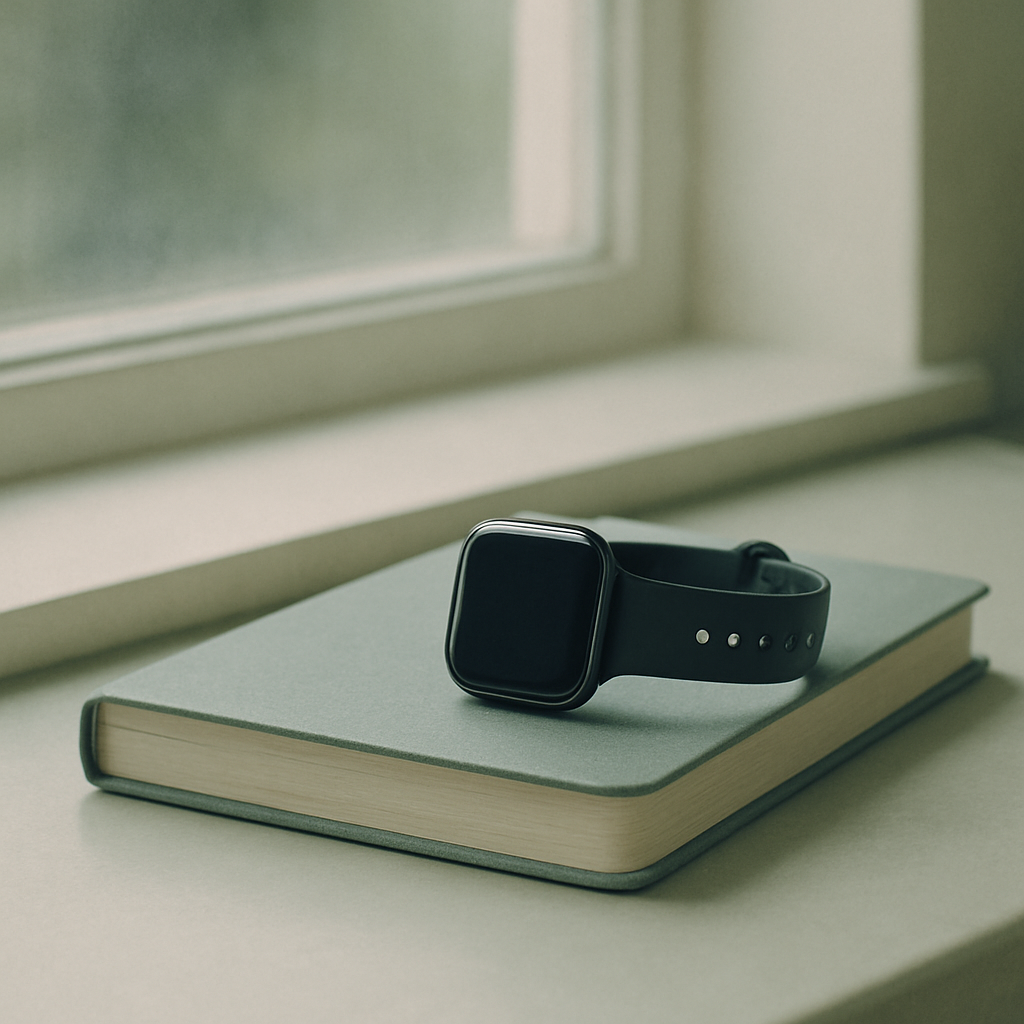
<p><strong>Apple Watch</strong></p> <p>Has greatly improved with watchOS 12. Now offers sleep stages, sleep score, and trends. However, sleeping with a watch on your wrist isn’t for everyone, and battery life remains its Achilles' heel: you need to charge it at some point during the day.</p>
<p><strong>WHOOP 5.0</strong></p> <p>Excellent sleep tracking with its “Sleep Coach” that tells you exactly what time you should go to bed to perform at your best. Automatically detects naps and is very accurate with sleep stages. The continuous band is comfortable for sleeping, though some users report irritation with prolonged use.</p>
<h3>❤️ Heart Monitoring and HRV</h3>
<p>Heart rate variability (HRV) has become the star metric of wellbeing. It's a direct indicator of your autonomic nervous system health: <strong>higher HRV = greater ability to adapt to stress.</strong></p>
<p><strong>WHOOP 5.0 — ⭐ Winner in HRV and cardiac performance</strong></p> <p>WHOOP measures HRV continuously during sleep and uses a sophisticated algorithm to calculate your daily "Recovery Score." This is the central metric of the entire WHOOP system: it tells you whether you should push yourself or rest today. In 2025, Stanford University researchers validated that WHOOP’s Recovery Score correlates with biochemical stress markers (cortisol) at r=0.78.</p>
<p><strong>Oura Ring Gen 4</strong></p> <p>Measures nighttime HRV with great precision. Its "Readiness Score" is conceptually similar to WHOOP's Recovery. The finger reading offers less artifact, cleaner data. A <em>Sensors</em> (2025) study found that Oura had a lower average error than wrist devices for HRV during sleep.</p>
<p><strong>Apple Watch</strong></p> <p>Measures HRV (using the Health app or third-party apps like Athlytic), resting heart rate, and offers notifications of irregular heart rhythm and atrial fibrillation detection—something neither Oura nor WHOOP offer with full medical certification. For pure medical monitoring, Apple Watch takes the lead.</p>
<h3>🏋️ Exercise and Activity Tracking</h3>
<p><strong>Apple Watch — ⭐ Winner in sports versatility</strong></p> <p>No real competition here. The Apple Watch supports more than 80 workout types, has integrated high-precision GPS, automatic exercise detection, advanced running metrics (power, stride length, ground contact time), and flawless integration with Apple Fitness+.</p>
<p><strong>WHOOP 5.0</strong></p> <p>Automatically detects over 200 activities and its “Strain” metric (cumulative cardiovascular effort) is fantastic for managing training load. Doesn't have built-in GPS, but can sync with your phone. Its strength isn’t workout tracking itself but helping you understand <strong>how much effort is optimal</strong> for your current recovery state.</p>
<p><strong>Oura Ring Gen 4</strong></p> <p>Oura has upgraded its activity tracking with automatic exercise detection and continuous heart rate in Gen 4. But it’s still the most limited of the three for specific workouts. No GPS and basic strength training tracking. Oura is more a <em>wellness</em> than <em>fitness</em> device.</p>
<h3>🔋 Battery and Comfort</h3>
<p>This factor is more important than it seems: <strong>the best wearable is the one you wear.</strong></p>
<p><strong>Oura Ring Gen 4 — ⭐ Winner for comfort</strong></p> <p>5–7 days of battery. Lightweight (4–6 grams), discreet, water-resistant up to 100 meters. Most users forget they’re even wearing it. It's the only one you can wear in any social situation with nobody noticing you’re wearing a tracker.</p>
<p><strong>WHOOP 5.0</strong></p> <p>4–5 days of battery. Screenless design saves energy. Smart charging: you slide a portable battery over the band and keep measuring while charging. Comfortable for sleep, though visible on your wrist.</p>
<p><strong>Apple Watch</strong></p> <p>1–2 days (Series 10) or 2–3 days in low power mode (Ultra 3). This is its major weakness. If you want 24/7 tracking including sleep, you need to find charging windows. Always-on display drains more power, but it's what makes it useful as a true watch.</p>
<h3>📱 Ecosystem and Apps</h3>
<p><strong>Apple Watch — ⭐ Winner for ecosystem</strong></p> <p>Thousands of apps, seamless iPhone integration, notifications, calls, payments, maps... It’s a computer on your wrist. For wellness, it integrates with Apple Health, the central health data hub on iOS.</p>
<p><strong>Oura Ring</strong></p> <p>Excellent proprietary app with clear insights and long-term trends. Good integration with Apple Health, Google Health Connect, Strava. New for 2026: "Oura Advisor," an AI coach that interprets your data and gives personalized advice (subscription required).</p>
<p><strong>WHOOP</strong></p> <p>Focused, to-the-point app: Recovery, Strain, Sleep. The "WHOOP Journal" lets you correlate habits (alcohol, caffeine, meditation) with your performance. Active community with teams and challenges. More limited third-party integration compared to Apple.</p>
<h3>💰 Price and Business Model</h3>
<p>This is where the differences become significant:</p>
<p><strong>Apple Watch:</strong> One-off purchase. Series 10 from ~€449, Ultra 3 from ~€899. No mandatory subscription (Apple Fitness+ is optional at €9.99/month).</p>
<p><strong>Oura Ring Gen 4:</strong> Ring purchase (~€349–449 depending on finish) plus monthly €5.99 subscription for advanced features. Without subscription you lose most useful insights.</p>
<p><strong>WHOOP 5.0:</strong> 100% subscription model. The band is “free” with membership (from ~€16/month with annual commitment, ~€30/month with no commitment). Long-term, it’s the most expensive: ~€192–360/year indefinitely.</p>
<p><strong>3-Year Cost:</strong></p> <ul> <li>Apple Watch Series 10: ~€449</li> <li>Oura Ring Gen 4: ~€349 + €216 = ~€565</li> <li>WHOOP 5.0: ~€576–1080</li> </ul>
<h2>Which Is For You? User Profile Guide</h2>
<h3>🧘 “I want to understand my body and improve my general wellbeing”</h3> <p><strong>→ Oura Ring Gen 4</strong></p> <p>If your priority is better sleep, managing stress, and having a holistic health view without distractions, Oura is your ally. Discreet, best battery, and unbeatable sleep analysis. Ideal for mindfulness practitioners, people who prioritize recovery, and anyone not wanting another gadget with notifications fighting for their attention.</p>
<h3>💪 “I'm an athlete or train seriously and want to optimize performance”</h3> <p><strong>→ WHOOP 5.0</strong></p> <p>If you train 4+ days a week and want to know exactly how hard to push each day, WHOOP is your coach. The Strain + Recovery system is the most sophisticated on the market for managing training load. Crossfitters, runners, cyclists, and endurance athletes find WHOOP a game changer.</p>
<h3>📱 “I want an all-rounder: health, productivity, and digital life”</h3> <p><strong>→ Apple Watch Series 10 or Ultra 3</strong></p> <p>If you want a single device that works as a watch, emergency phone, GPS navigator, health monitor, and personal assistant, Apple Watch is unmatched. The Ultra 3 adds battery, durability, and precision for adventure sports. By far the most versatile.</p>
<h3>🔀 “What if I use two?”</h3> <p>Many wellness enthusiasts combine devices. The most popular combos:</p> <ul> <li><strong>Apple Watch + Oura Ring:</strong> The best of both worlds. Apple Watch for daytime (exercise, notifications, productivity), Oura Ring for night (deep sleep, recovery). The most popular biohacker combo.</li> <li><strong>WHOOP + Oura Ring:</strong> Sports performance + holistic wellbeing. Less economic sense (two subscriptions), but some hardcore athletes swear by it.</li> </ul>
<h2>What Science Says About Wearables in 2026</h2>
<p>Beyond marketing, scientific research has produced relevant findings this year:</p>
<ul> <li><strong>Early disease detection:</strong> A multicenter study published in <em>The Lancet Digital Health</em> (2025) with 50,000 wearable users showed that shifts in HRV and nightly temperature can detect viral infections up to 48 hours before symptoms.</li> <li><strong>Behavioral impact:</strong> A meta-analysis in <em>JAMA Network Open</em> (2025) concluded that wearable users walk on average 40% more and sleep 23 minutes longer than before using the device. The effect is strongest when AI coaching is integrated.</li> <li><strong>Clinical accuracy:</strong> The FDA approved multiple consumer wearable features for clinical use in 2025–2026, including atrial fibrillation detection (Apple Watch) and sleep apnea tracking (Apple Watch and Oura Ring).</li> <li><strong>Mental health:</strong> Researchers at the University of California showed that HRV, sleep, and activity patterns measured by wearables can predict anxiety or depression episodes with 72% accuracy, opening the door to preventive interventions.</li> </ul>
<h2>The Future: What’s Coming in 2026–2027?</h2>
<p>The health wearable market evolves at breakneck speed. These are the trends transforming the sector:</p>
<p><strong>Non-invasive glucose monitoring:</strong> Apple, Samsung, and Oura are working on optical sensors to measure blood glucose without needles. The first commercial rollout is expected by late 2026 or early 2027. This will be a game-changer for personalized nutrition.</p>
<p><strong>More advanced predictive AI:</strong> Wearables will stop being reactive (“you slept badly”) and turn proactive (“based on your patterns, you need to go to bed at 10:30 PM and avoid screens after 9:00 PM”). WHOOP and Oura are already moving this way with their AI coaches.</p>
<p><strong>Telemedicine integration:</strong> Your wearable data will be shared directly with your doctor, enabling continuous monitoring of chronic conditions from home. Apple leads here with its HealthKit platform and integrated medical records.</p>
<p><strong>New form factors:</strong> Beyond watches and rings, expect to see skin patches, earbuds with biometric sensors, and smart clothing that measures everything from posture to body composition.</p>
<h2>Summary Table: The Overview at a Glance</h2>
<table> <thead> <tr><th>Feature</th><th>Apple Watch</th><th>Oura Ring Gen 4</th><th>WHOOP 5.0</th></tr> </thead> <tbody> <tr><td><strong>Best for</strong></td><td>All-in-one</td><td>Sleep & wellbeing</td><td>Athletic performance</td></tr> <tr><td><strong>Form</strong></td><td>Watch</td><td>Ring</td><td>Band</td></tr> <tr><td><strong>Screen</strong></td><td>Yes (OLED)</td><td>No</td><td>No</td></tr> <tr><td><strong>GPS</strong></td><td>Yes</td><td>No</td><td>No</td></tr> <tr><td><strong>Battery</strong></td><td>1–3 days</td><td>5–7 days</td><td>4–5 days</td></tr> <tr><td><strong>Sleep</strong></td><td>⭐⭐⭐⭐</td><td>⭐⭐⭐⭐⭐</td><td>⭐⭐⭐⭐</td></tr> <tr><td><strong>Exercise</strong></td><td>⭐⭐⭐⭐⭐</td><td>⭐⭐⭐</td><td>⭐⭐⭐⭐</td></tr> <tr><td><strong>HRV/Recovery</strong></td><td>⭐⭐⭐</td><td>⭐⭐⭐⭐⭐</td><td>⭐⭐⭐⭐⭐</td></tr> <tr><td><strong>Comfort</strong></td><td>⭐⭐⭐</td><td>⭐⭐⭐⭐⭐</td><td>⭐⭐⭐⭐</td></tr> <tr><td><strong>Price (3 years)</strong></td><td>~€449</td><td>~€565</td><td>~€576–1080</td></tr> <tr><td><strong>Subscription</strong></td><td>Optional</td><td>€5.99/month</td><td>Mandatory</td></tr> </tbody> </table>
<h2>Our Triwell Recommendation</h2>
<p>At Triwell, we believe <strong>wellness is personal</strong>, and the technology you use to care for yourself should be, too. There’s no perfect wearable, only <em>your</em> perfect wearable.</p>
<p>If we had to pick just one for most people seeking to improve their general wellbeing, we'd recommend the <strong>Oura Ring Gen 4</strong>. Why? Because sleep underpins everything else—fitness, nutrition, mental health—and Oura is the best at measuring what happens while you sleep. It’s discreet, has great battery life, and its “less noise, more signal” philosophy fits a conscious life.</p>
<p>But if you’re a serious athlete, WHOOP will transform your training. And if you want a complete ecosystem with just one device, Apple Watch remains unbeatable.</p>
<p><strong>The best advice we can give:</strong> pick one, use it consistently for at least 3 months, and let the data teach you about yourself. The magic isn’t in the device; it’s in what you do with the information. 💡</p>
<p>And remember: no wearable replaces listening to your own body. They’re tools to amplify your self-knowledge, not to replace it. Wellbeing starts with you. 🔺</p>