 9 min read
Top technology to boost your mental health in 2026
 Equipo TriwellMarch 8, 20269 min
Technology often gets a bad rap when we talk about mental health. And, to some extent, for good reason: social media drains us, notifications fracture our attention, and the “always connected” mentality has stolen our silence. But there’s another side to the story that deserves attention: some of today’s most effective tools for caring for our minds actually come in digital format.
I’m not talking about replacing a psychologist with an app. That would be absurd. I’m talking about complementing healthy habits with technology designed to help us—not to hook us. And in 2026, the options have matured enough to make a serious review worthwhile.
## Meditation and Mindfulness Apps: Beyond the Hype
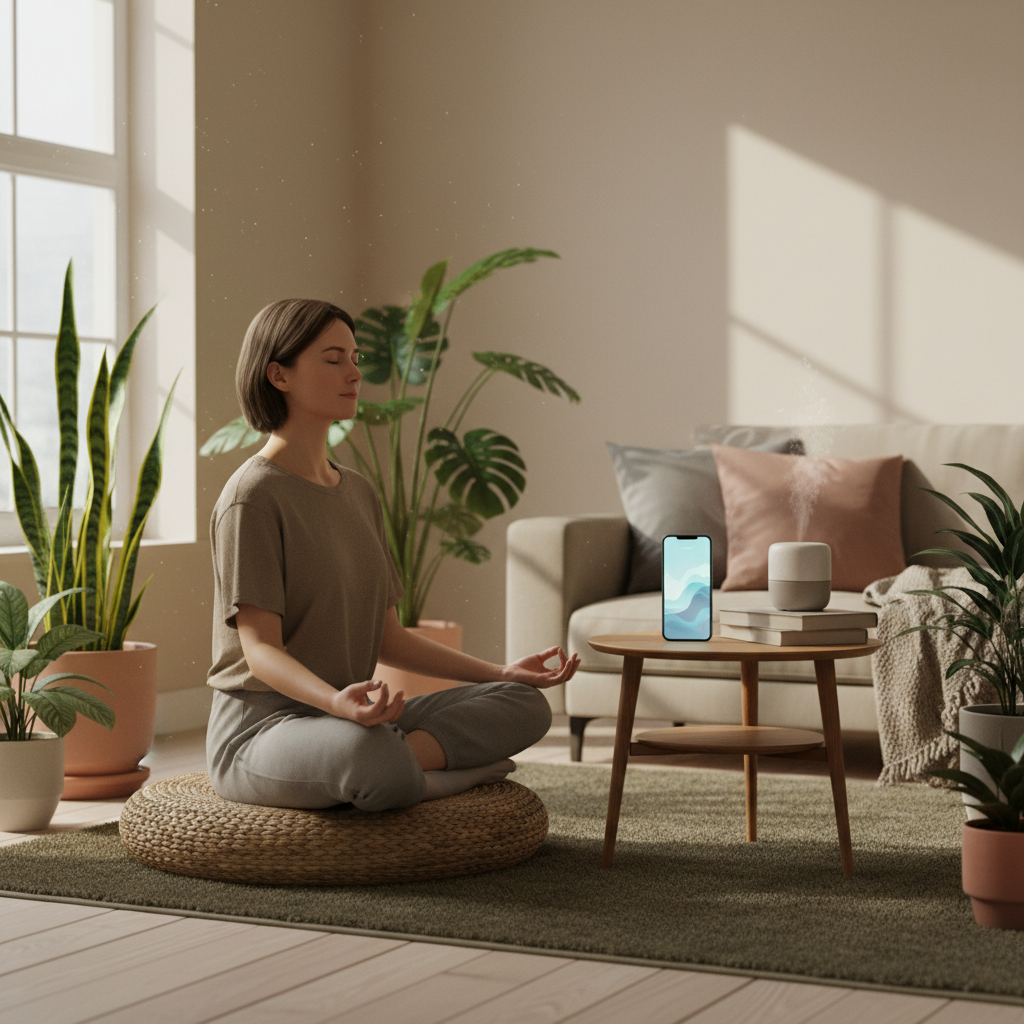
Five years ago, recommending a meditation app sounded like a passing fad. Today, the scientific evidence is overwhelming. A meta-analysis published in JAMA Internal Medicine analyzed 47 clinical trials and concluded that mindfulness meditation significantly reduces anxiety, depression, and chronic pain. Apps simply make this practice more accessible.
**Calm** is still the benchmark. Its guided meditations range from 3-minute sessions for beginners to 21-day programs for better sleep. What sets it apart is production quality: the sleep stories narrated by soothing voices work surprisingly well for those who struggle with insomnia. It’s not magic, it’s basic neurophysiology: monotonous narrative deactivates the brain’s alert system.
**Headspace** takes a more structured approach, with themed courses on workplace stress, self-esteem, or emotion management. The free version is generous, and the paid version includes personalized sessions with AI that adapts the practice to your mood each day.
**Othership** is this year’s surprise. It focuses exclusively on conscious breathing with over 500 classes accompanied by original music. It sounds simple, but the science backs it: diaphragmatic breathing activates the vagus nerve, which regulates the body’s parasympathetic response. Translation: it really calms you down, and fast.
My personal recommendation: don’t commit to just one app. Try several, using each for a week, and stick with the one that feels right for your pace. Some people prefer guided voices; others opt for ambient music and silence.
## Wearables: Data That Helps You Understand Yourself
Smartwatches and fitness bands have evolved from simple step counters into true wellness monitors. This is where technology delivers something no therapist can: objective, continuous data about your body.
**Heart Rate Variability (HRV)** is probably the most useful metric most people ignore. It measures the variation between consecutive heartbeats and is a reliable indicator of physiological stress. High HRV means your nervous system is balanced; low HRV means you’re in survival mode. Devices like Apple Watch, Garmin, and the Oura ring track HRV continuously.
What’s the point of knowing this? To make decisions. If your HRV has been dropping for three days, maybe it’s not the right time for that extra project. If it rises after a walk in the park, you have real data showing that activity benefits you.
**Sleep tracking** is another pillar. The relationship between sleep and mental health is thoroughly documented: lack of sleep increases irritability, reduces your ability to regulate emotions, and triples the risk of anxiety episodes. Apps like **Sleep Cycle** analyze your patterns and wake you up during light sleep phases, which makes a real difference in how you feel when starting your day.
You don’t need the most expensive wearable on the market. A Xiaomi Band does a decent job to start. What’s important is developing the habit of watching your body’s signals, not accumulating gadgets.
## Digital Detox: The Necessary Paradox
It may sound contradictory to use technology to disconnect from technology, but it works. It works because it addresses the problem where it happens: on the device itself.
**Clearspace** intercepts those impulsive phone unlocks. You know, when you pick up your phone for no reason and end up scrolling through Instagram for 20 minutes without having consciously decided to do so. The app gives you a mini-challenge before opening certain apps, just enough for your rational brain to take control.
**Forest** gamifies focus. You plant a virtual tree that grows as long as you don’t touch your phone. If you unlock it, the tree dies. It sounds childish, but the commitment mechanic is effective. A Stanford University study found that gamification techniques increase adherence to positive habits by 40%.
**Native focus modes** on iOS and Android have also improved significantly. You can now schedule notification-free periods, silence app groups based on context (work, rest, exercise), and activate notification summaries to review everything at once instead of suffering constant interruptions.
## Online Therapy and AI Chatbots: Handle With Care
This is the area where you have to be most careful. Online therapy platforms like **BetterHelp** or **Talkspace** connect you with real professionals via video call, chat, or messaging. They are legitimate and useful, especially if you live in an area with few psychologists or have complicated schedules. But they’re not cheap: they range from 40 to 70 euros per week.
AI chatbots are a different story. **Wysa** and **Woebot** offer conversations based on cognitive-behavioral therapy and are free. Do they replace a professional? No. Can they help you sort out your thoughts at 3 a.m. when you can’t sleep? Yes. A clinical trial published in the Journal of Medical Internet Research showed that Woebot users reduced their depression symptoms by 22% after two weeks of regular use.
The key is expectations. If you expect an AI to “cure” you, you’ll be disappointed. If you use it as an interactive journal that asks smart questions, it can be a valuable resource.
## Digital Journals and Emotional Tracking
Recording how you feel each day may seem simple, but it has a powerful impact. Psychologists call this “emotional labeling,” and multiple studies show that simply naming an emotion reduces its intensity. The brain shifts from reactive mode to analytical mode.
**Daylio** allows you to log your mood with one tap, no need to write paragraphs. Over time, it generates graphs that reveal patterns: you might discover your worst days coincide with low-exercise weeks, or that Sundays always bring your mood down.
**Notion** and **Obsidian**, though not mental health apps per se, are excellent tools for building a personalized journaling system. You can design templates with guided questions, link notes on sleep, exercise, and nutrition, and build your own wellness map.
## How to Start Without Getting Overwhelmed
If you’re reading this and thinking, “these are too many options,” that’s normal. The paradox of choice applies here, too. My suggestion is to start with exactly two things:
1. **A meditation app** that you use for 5 minutes a day. Just five. Consistency matters more than duration. 2. **A quick mood log.** Daylio, a note on your phone, or even an emoji on your calendar. Whatever it is, do it every day.
Give it two weeks. If you notice any change, no matter how small, add a third element. It could be tracking your HRV, installing a distraction blocker, or trying out a therapy chatbot.
Technology isn’t the solution to mental health issues, but it can be a powerful ally if you use it intentionally. In a world where we spend more than seven hours a day in front of screens, it makes perfect sense for some of that time to be spent taking care of ourselves rather than wearing ourselves out.
What matters is not the tool you choose, but your decision to start paying attention to your emotional well-being. And if an app helps you take that first step, then welcome it.