 15 min read
Plant protein: A complete guide to meeting your needs without meat
 Equipo TriwellMarch 31, 202615 min
<p>Is it possible to live—and perform at your best—without animal protein? The short answer is <strong>yes, absolutely</strong>. The long answer is this article, where we’ll debunk myths, analyze the latest science, and give you a practical plan to fully meet your protein needs with plant-based foods.</p>
<p>Whether you’re vegan, vegetarian, flexitarian, or simply someone looking to reduce your meat intake for health or sustainability, this guide is for you.</p>
<h2>What is protein and why do you need it?</h2>
<p>Proteins are macronutrients made up of chains of <strong>amino acids</strong>. Your body uses them for nearly everything: building and repairing muscle, making enzymes and hormones, maintaining the immune system, transporting nutrients... They are, literally, the building blocks of your body.</p>
<p>There are <strong>20 amino acids</strong>, 9 of which are <em>essential</em>: your body can’t produce them, so you need to get them from food. These are: histidine, isoleucine, leucine, lysine, methionine, phenylalanine, threonine, tryptophan, and valine.</p>
<p>Animal protein usually contains all 9 in the right proportions (called "complete protein"), while many plant sources have one or more amino acids in limited amounts. But here’s the key: <strong>this isn’t a problem if you know how to combine foods</strong>.</p>
<h2>The myth of incomplete protein</h2>
<p>For decades, people repeated the idea that plant proteins were "second-rate." This came from the 1970s book <em>Diet for a Small Planet</em> by Frances Moore Lappé, which suggested that you needed to combine plant sources <em>at every meal</em> to get all amino acids.</p>
<p>The author herself later corrected this, and today’s science is clear: <strong>you do not need to combine proteins at every meal</strong>. Your body maintains an amino acid "pool" that’s constantly replenished. As long as you eat a variety over the day, you’re covered.</p>
<p>Plus, several plant sources are complete proteins on their own:</p>
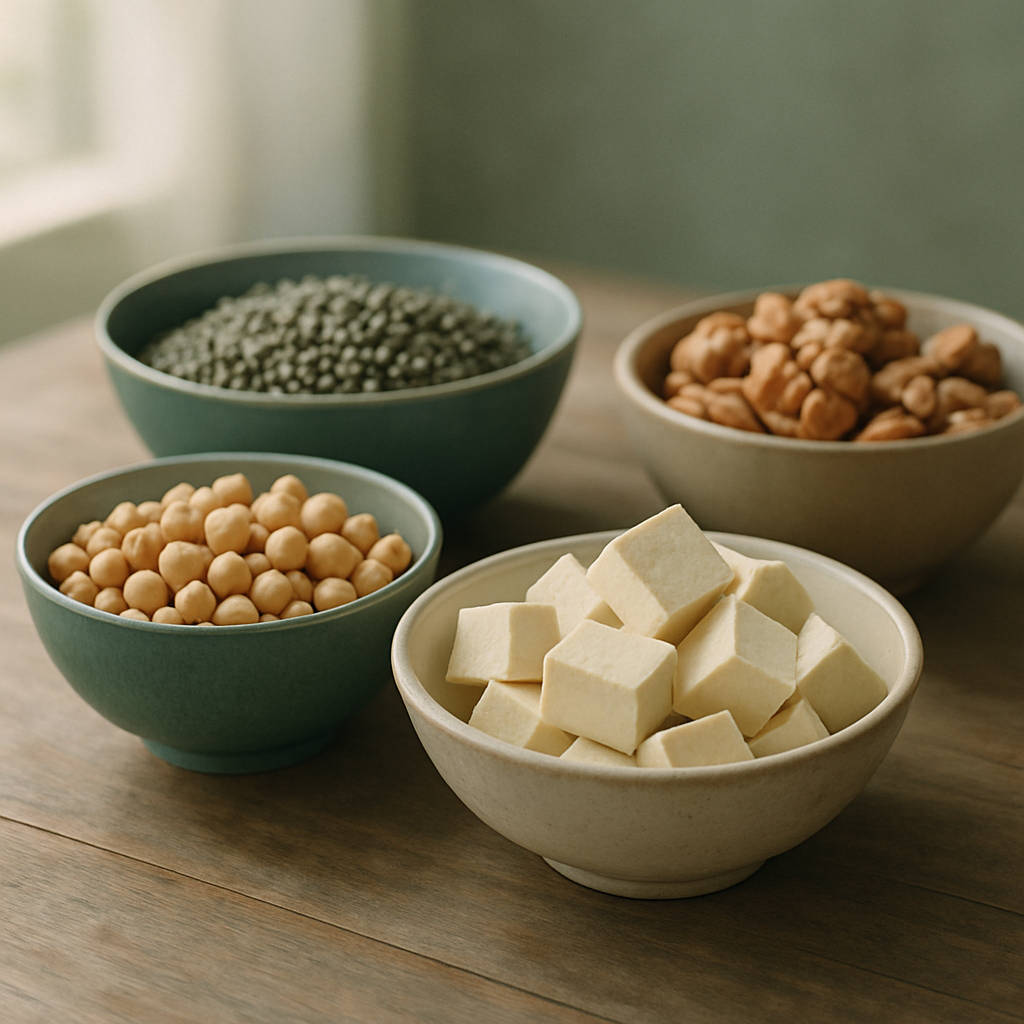
<ul> <li><strong>Soy</strong> (tofu, tempeh, edamame)</li> <li><strong>Quinoa</strong></li> <li><strong>Amaranth</strong></li> <li><strong>Chickpeas</strong></li> <li><strong>Pistachios</strong></li> <li><strong>Hemp seeds</strong></li> <li><strong>Spirulina</strong></li> </ul>
<h2>PDCAAS and DIAAS: measuring protein quality</h2>
<p>Evaluating protein quality is more than counting grams. Scientists use two main metrics:</p>
<h3>PDCAAS (Protein Digestibility Corrected Amino Acid Score)</h3> <p>Rates quality based on the limiting amino acid and digestibility. Scale from 0 to 1. Whey, egg, and isolated soy protein score <strong>1.0</strong> (the maximum). Legumes are around 0.6-0.7 individually.</p>
<h3>DIAAS (Digestible Indispensable Amino Acid Score)</h3> <p>The most modern metric, recommended by the FAO since 2013. More precise because it evaluates digestibility of each amino acid separately at the ileal (small intestine) level, not fecal.</p>
<p>With DIAAS, isolated soy scores ~98, very close to whey (~100). And most interesting: <strong>a study published in <em>Nutrients</em> (2022) showed that well-planned vegan menus reach DIAAS of 83-94</strong>, more than enough to meet the needs of active adults.</p>
<h2>The 12 best sources of plant protein</h2>
<p>Here are the top sources, with their protein content per 100 g of cooked product (unless otherwise specified):</p>
<h3>1. Soy and derivatives</h3> <p><strong>Firm tofu:</strong> 17 g | <strong>Tempeh:</strong> 20 g | <strong>Edamame:</strong> 11 g</p> <p>Soy is the queen of plant protein. Amino acid profile almost identical to animal. Tempeh, being fermented, has better bioavailability and additional probiotic benefits.</p>
<h3>2. Lentils</h3> <p><strong>9 g protein</strong> per 100 g cooked. Rich in iron, folate, and fiber. Limiting amino acid is methionine, easily complemented by grains.</p>
<h3>3. Chickpeas</h3> <p><strong>9 g protein</strong> per 100 g cooked. Complete protein according to recent studies. Base for hummus, falafel, and countless other dishes.</p>
<h3>4. Quinoa</h3> <p><strong>4.4 g protein</strong> per 100 g cooked. Not the densest source but a complete protein and very versatile. Ideal as a bowl base.</p>
<h3>5. Seitan</h3> <p><strong>25 g protein</strong> per 100 g. The champion for plant protein density. It’s wheat gluten, so not suitable for celiacs. Low in lysine, but combine it with legumes and you’re set.</p>
<h3>6. Hemp seeds</h3> <p><strong>31 g protein</strong> per 100 g. Complete protein with an excellent omega-3/omega-6 ratio. Three tablespoons provide ~10 g protein. Add them to smoothies, salads, or yogurt.</p>
<h3>7. Peanuts and peanut butter</h3> <p><strong>26 g protein</strong> per 100 g (raw). Technically a legume, not a nut. High calorie density: perfect if you’re looking to gain muscle mass.</p>
<h3>8. Oats</h3> <p><strong>13 g protein</strong> per 100 g (dry). Good amino acid profile for a cereal. An 80 g bowl gives you ~10 g protein.</p>
<h3>9. Black beans</h3> <p><strong>9 g protein</strong> per 100 g cooked. Rich in antioxidants (anthocyanins). Combined with rice, they make the classic “complete protein” of Latin American cuisines.</p>
<h3>10. Nutritional yeast</h3> <p><strong>50 g protein</strong> per 100 g. Complete protein. Two tablespoons give ~8 g protein plus B vitamins (including B12 if fortified). Umami flavor reminiscent of cheese.</p>
<h3>11. Peas</h3> <p><strong>5 g protein</strong> per 100 g cooked, but isolated pea protein has 80 g/100 g and a PDCAAS of 0.89. Base for many vegan supplements.</p>
<h3>12. Almonds and other nuts</h3> <p><strong>21 g protein</strong> per 100 g (almonds). Also provide healthy fats, vitamin E, and magnesium. A handful (30 g) = ~6 g protein.</p>
<h2>How to combine foods for complete amino acids</h2>
<p>Though you don’t need to combine at every meal, knowing classic combos helps you plan better:</p>
<table> <thead> <tr><th>Combination</th><th>Why it works</th><th>Example</th></tr> </thead> <tbody> <tr><td>Legumes + Grains</td><td>Legumes are low in methionine, grains low in lysine → they complement each other</td><td>Lentils with rice, hummus with bread</td></tr> <tr><td>Legumes + Seeds</td><td>Seeds provide methionine</td><td>Chickpea salad with tahini</td></tr> <tr><td>Nuts + Legumes</td><td>Overall amino acid balance</td><td>Pad thai with tofu and peanuts</td></tr> <tr><td>Grains + Soy</td><td>Soy is complete, grain boosts methionine</td><td>Rice with edamame</td></tr> </tbody> </table>
<p><strong>Key fact:</strong> many traditional cuisines already do this intuitively. Rice and beans in Mexico, dal with chapati in India, couscous with chickpeas in the Maghreb. Centuries of culinary wisdom had the answer long ago.</p>
<h2>How much protein do you really need?</h2>
<p>Recommendations vary depending on your activity level:</p>
<ul> <li><strong>Sedentary adult:</strong> 0.8 g/kg/day (WHO recommendation)</li> <li><strong>Active adult (vegan):</strong> 1.0–1.2 g/kg/day (slightly higher to account for lower digestibility)</li> <li><strong>Vegan athlete:</strong> 1.6–2.2 g/kg/day (per joint ACSM/AND/DC position)</li> <li><strong>Older adults (+65):</strong> 1.2–1.5 g/kg/day (to preserve muscle mass)</li> </ul>
<p>Why a bit more if it’s plant-based? Because the average digestibility of plant proteins is slightly lower (~85–90% vs. ~95% animal). Increasing by 10–15% easily compensates for this difference.</p>
<p>For a 70 kg active person, that means <strong>70–84 g protein per day</strong>. Let’s see how you can easily reach this:</p>
<h2>Sample full day (80 g plant protein)</h2>
<h3>Breakfast — Protein Overnight Oats</h3> <ul> <li>80 g oats (10 g protein)</li> <li>200 ml soy milk (7 g protein)</li> <li>2 tbsp hemp seeds (10 g protein)</li> <li>1 banana + cinnamon</li> </ul> <p><strong>Total: ~27 g protein</strong></p>
<h3>Lunch — Lentil Buddha Bowl</h3> <ul> <li>150 g cooked lentils (14 g protein)</li> <li>100 g cooked quinoa (4 g protein)</li> <li>Roasted veggies (broccoli, sweet potato, kale)</li> <li>2 tbsp nutritional yeast (8 g protein)</li> <li>Tahini and lemon</li> </ul> <p><strong>Total: ~26 g protein</strong></p>
<h3>Snack</h3> <ul> <li>30 g almonds (6 g protein)</li> <li>1 apple</li> </ul> <p><strong>Total: ~6 g protein</strong></p>
<h3>Dinner — Tofu Stir-Fry with Rice</h3> <ul> <li>150 g firm tofu (25 g protein)</li> <li>100 g cooked brown rice (3 g protein)</li> <li>Stir-fried veggies (bell pepper, carrot, mushrooms)</li> <li>Soy sauce and ginger</li> </ul> <p><strong>Total: ~28 g protein</strong></p>
<p><strong>DAILY TOTAL: ~87 g protein</strong> — without supplements, without shakes, just real food.</p>
<h2>Plant protein supplements: when and which?</h2>
<p>They’re not always necessary, but may be useful if:</p> <ul> <li>You’re an athlete with high requirements (+1.6 g/kg)</li> <li>You have little time to cook</li> <li>You want a quick post-workout source</li> </ul>
<p>The best vegan supplements combine several sources for a complete amino acid profile:</p>
<ul> <li><strong>Pea + rice protein:</strong> the most popular combo. PDCAAS close to 1.0. Texture and flavor have improved enormously.</li> <li><strong>Isolated soy protein:</strong> DIAAS of 98. The most researched with the most evidence.</li> <li><strong>Hemp protein:</strong> less dense but with omega-3. Great for smoothies.</li> </ul>
<p>Look for products with <strong>at least 20 g protein per serving</strong>, low added sugars, and with amino acid profiles shown on the label.</p>
<h2>Common mistakes on a high-plant-protein diet</h2>
<h3>1. Eating just one source</h3> <p>If your protein comes from only chickpeas all day, you'll have an excess of some amino acids and a shortage of others. <strong>Variety is key.</strong></p>
<h3>2. Forgetting about leucine</h3> <p>Leucine most strongly stimulates muscle protein synthesis (via mTOR). Plant sources generally have less leucine than animal ones. Solution: include soy, lentils, and peanuts daily—they’re the plant sources richest in leucine.</p>
<h3>3. Not eating enough overall</h3> <p>Many plant-based diets are high in fiber and very filling. If you eat too little, your protein intake falls short. Make sure to meet your calorie needs.</p>
<h3>4. Ignoring other key nutrients</h3> <p>A well-planned plant-based diet should also pay attention to:</p> <ul> <li><strong>Vitamin B12:</strong> always supplement (there’s no reliable plant source)</li> <li><strong>Iron:</strong> consume with vitamin C to boost absorption</li> <li><strong>Zinc:</strong> legumes and seeds, but absorption is lower</li> <li><strong>Omega-3 (DHA/EPA):</strong> algae supplements</li> <li><strong>Vitamin D:</strong> sun exposure or supplement</li> </ul>
<h2>The science backs plant protein</h2>
<p>This isn’t about opinion, but solid evidence:</p>
<ul> <li>A <strong>2024 meta-analysis in <em>The American Journal of Clinical Nutrition</em></strong> concluded that plant-based diets provide enough protein to maintain muscle mass when calorie needs are met.</li> <li>Researchers from the University of São Paulo demonstrated that <strong>pea + rice blends produce muscle protein synthesis responses comparable to whey</strong> in trained young adults.</li> <li>The <em>Nutrients</em> (2022) DIAAS study confirmed that diverse vegan menus reach protein quality scores of 83–94 out of 100.</li> <li>The <strong>Academy of Nutrition and Dietetics</strong> official position (2016, reaffirmed) states that well-planned vegetarian and vegan diets are nutritionally adequate for all life stages, including athletes.</li> </ul>
<h2>Environmental impact: the extra argument</h2>
<p>Cutting down on animal protein benefits more than your health. According to the FAO:</p>
<ul> <li>Livestock generates <strong>14.5% of global greenhouse gas emissions</strong></li> <li>Producing 1 kg of beef protein requires <strong>18 times more land</strong> than 1 kg of legume protein</li> <li>The water footprint of soy protein is <strong>6 times lower</strong> than that of beef</li> </ul>
<p>Every plant-based meal is a small act of care for the planet. You don’t have to be 100% vegan to make a difference—<strong>every substitution counts</strong>.</p>
<h2>Conclusion: your body doesn’t care about the source</h2>
<p>At a molecular level, an amino acid is an amino acid. Your muscles don’t care if leucine comes from a steak or from lentils. What matters is that <strong>you get enough of it and do so regularly</strong>.</p>
<p>Plant protein is no longer a compromise—it’s a <strong>smart, sustainable, science-backed choice</strong>. With a bit of planning and variety, you can meet all your needs without sacrificing performance, taste, or health.</p>
<p>Your next step: pick one of the sample meals above and try it this week. One small change, one huge impact. 💚</p>