 16 min read
Personal quantification: Track your wellness without obsession
 Equipo TriwellMarch 30, 202616 min
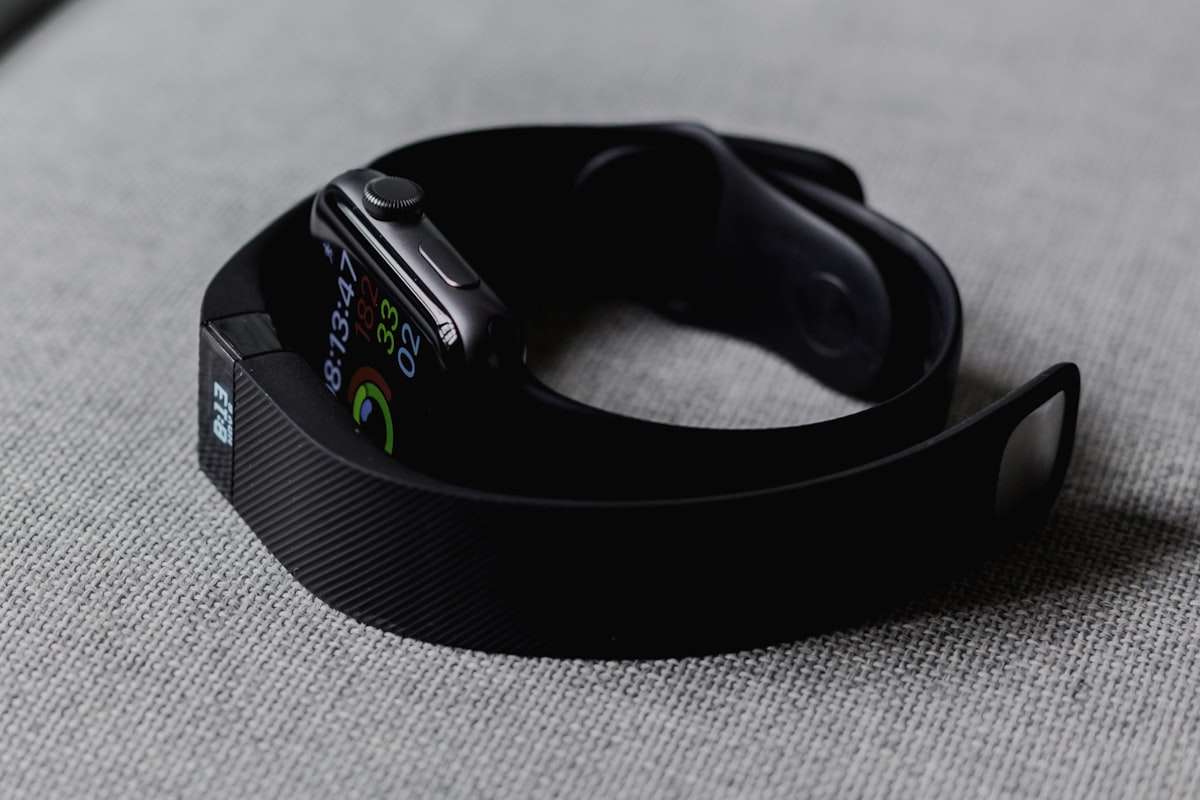
<article> <p>We live in the era of data. Your smart watch knows how many steps you take, how you sleep, how many calories you burn, and even how your heart beats while you read this article. <strong>Personal quantification</strong>—or the <em>quantified self</em>—promises a healthier, more optimized, more... <em>measured</em> life. But what if measuring everything is actually making you less happy?</p>
<p>At Triwell, we believe technology should <strong>add to your wellbeing, not take away from it</strong>. That's why this guide will teach you how to use data to your advantage—without turning it into a cage of numbers.</p>
<h2>What is personal quantification?</h2>
<p>The <em>Quantified Self</em> movement was born in 2007 at the hands of <em>Wired</em> magazine editors, Gary Wolf and Kevin Kelly. The idea was simple yet revolutionary: <strong>use personal data to know yourself better and make smarter decisions about your health and your life</strong>.</p>
<p>Today, personal quantification covers everything you can measure about yourself:</p>
<ul> <li><strong>Physical activity:</strong> steps, distance, calories, heart rate zones</li> <li><strong>Sleep:</strong> duration, stages, interruptions, quality score</li> <li><strong>Nutrition:</strong> macros, calories, hydration</li> <li><strong>Mental health:</strong> mood, stress levels, meditation sessions</li> <li><strong>Biomarkers:</strong> heart rate variability (HRV), oxygen saturation, body temperature</li> <li><strong>Productivity:</strong> time on tasks, habits, streaks</li> </ul>
<p>According to a study published in the <em>Journal of Medical Internet Research</em> (2023), <strong>over 60% of adults in developed countries use some kind of device or app to monitor their health</strong>. It’s a global phenomenon, and it’s on the rise.</p>
<h2>Real benefits (when done right)</h2>
<p>We’re not here to demonize data. When used wisely, personal quantification carries scientifically-backed benefits:</p>
<h3>1. Expanded self-awareness</h3>
<p>The simple act of measuring a behavior can change it. Psychologists call this the <strong>reactivity effect</strong>: when you know you’re being watched, you make better decisions. A meta-analysis in <em>Annals of Behavioral Medicine</em> found that people who track their physical activity walk <strong>an average of 2,000 more steps per day</strong> than those who don’t.</p>
<h3>2. Early problem detection</h3>
<p>Your wearable can spot anomalies before you feel them. Stanford researchers (2020) showed that <strong>changes in resting heart rate and skin temperature could predict viral infections up to 9 days before symptoms appeared</strong>. During the COVID-19 pandemic, several studies confirmed that wearable data helped with early case detection.</p>
<h3>3. Sleep optimization</h3>
<p>Most people don’t realize they sleep poorly until the data shows them. Devices like the Oura Ring or Apple Watch can reveal patterns such as <strong>frequent nighttime wake-ups, lack of deep sleep, or inconsistent routines</strong> that, once identified, can be corrected with specific changes.</p>
<h3>4. Evidence-based motivation</h3>
<p>Seeing your progress in graphs creates a positive reinforcement cycle. It’s not about competing with anyone—it’s about seeing how your daily choices turn into real results. A University of Pennsylvania study (2019) with over 600 participants showed that <strong>gamified tracking of physical activity increased exercise levels by 27%</strong> compared to the control group.</p>
<h3>5. More productive conversations with your doctor</h3>
<p>Arriving at a doctor’s visit with weeks of data on your sleep, heart rate, or stress levels transforms the appointment. Instead of a vague “I’m not sleeping well,” you can say: <strong>“My deep sleep has dropped from 1h30 to 45 minutes in the last three weeks”</strong>. That’s actionable information.</p>
<h2>The dark side: when measuring becomes obsession</h2>
<p>This is where things get tricky. Because the same tool that helps you can also become a source of anxiety. And this isn’t just a theoretical risk—it’s something researchers and clinicians are seeing more and more often.</p>
<h3>Orthosomnia: when your watch keeps you up at night</h3>
<p>Researchers at Northwestern University’s Center for Sleep Medicine coined the term <strong>“orthosomnia”</strong> in 2017 to describe something ironic: people sleeping worse <em>because they’re obsessed with their sleep data</em>. They see a low score and fall into an anxiety loop that—guess what—makes their sleep even worse.</p>
<p>It’s like watching the clock when you can’t sleep. The more you look, the worse you sleep.</p>
<h3>The tyranny of numbers</h3>
<p>“I only did 8,200 steps today—I need to hit 10,000.” It’s midnight, it’s raining, and there you are pacing around your living room to hit some arbitrary number. Sound familiar?</p>
<p>Numerical goals can become <strong>ends in themselves</strong>, disconnected from the wellbeing they’re supposed to promote. The data stops being a guide and becomes a tyrannical boss. A study in <em>Sociology of Health & Illness</em> (2019) found that many activity tracker users experienced <strong>guilt, frustration, and a sense of failure</strong> when they didn’t meet their daily targets.</p>
<h3>Digital nutritional obsession</h3>
<p>Counting calories can be useful for a while. But for some people, it turns into a <strong>toxic relationship with food</strong>. Researchers from the International Journal of Eating Disorders (2023) found a significant association between <strong>heavy use of calorie counting apps and symptoms of eating disorders</strong>, especially in young people.</p>
<p>The line between “mindful eating” and obsessing over every gram of protein is thinner than it looks.</p>
<h3>The precision bias</h3>
<p>Here’s a secret most manufacturers won’t tell you: <strong>most consumer wearables are not medical devices</strong>. Calorie burn measurements can have an error margin of 27-93%, according to a Stanford study (2017). Sleep stages are estimates, not electroencephalograms. Your watch’s SpO2 doesn’t replace a clinical pulse oximeter.</p>
<p>Making important health decisions based on inaccurate data can backfire—or even be dangerous.</p>
<h2>The Triwell approach: conscious quantification</h2>
<p>At Triwell, we advocate an approach we call <strong>conscious quantification</strong>: use technology as a compass, not as a chain. Here are our principles:</p>
<h3>1. Measure what matters (and forget the rest)</h3>
<p>You don’t need to track 47 metrics. Science suggests there are a few key indicators that truly matter for most people:</p>
<ul> <li><strong>Sleep:</strong> duration and consistency (more important than “stages”)</li> <li><strong>Movement:</strong> weekly active minutes (WHO recommends 150-300 min/week of moderate activity)</li> <li><strong>Resting heart rate:</strong> long-term trend</li> <li><strong>HRV (heart rate variability):</strong> reliable indicator of recovery and stress</li> <li><strong>Subjective mood:</strong> yes, your perception counts—a lot</li> </ul>
<p>The rest is noise. Or at most, complementary info you can check occasionally without getting obsessed.</p>
<h3>2. Watch trends, not points</h3>
<p>One bad night’s sleep means nothing. A week of bad sleep is a sign. A month is a pattern. <strong>Individual data is noisy; trends are meaningful</strong>.</p>
<p>Practical tip: set your apps to show you <strong>weekly or monthly averages</strong>, not daily data. This reduces anxiety and improves data quality.</p>
<h3>3. Set “review windows”</h3>
<p>Instead of checking your stats 15 times a day, pick specific times to review your data:</p>
<ul> <li><strong>Quick morning review (2 min):</strong> How did I sleep? How do I feel? Adjust the day if needed.</li> <li><strong>Weekly review (10 min):</strong> How were my averages? Any patterns that stick out?</li> <li><strong>Monthly review (20 min):</strong> Am I moving toward my goals? Do I need to change anything?</li> </ul>
<p>Outside those windows, <strong>mute notifications from your health apps</strong>. Seriously. Your wellbeing won’t improve by checking your steps every 20 minutes.</p>
<h3>4. Use range goals, not exact numbers</h3>
<p>Instead of “exactly 10,000 steps,” use “between 7,000 and 12,000 steps.” Instead of “8 hours of sleep,” aim for “between 7 and 9 hours.” <strong>Ranges reduce pressure and are better aligned with your body’s natural variability</strong>.</p>
<p>Research from Dr. I-Min Lee at Harvard (published in <em>JAMA Internal Medicine</em>, 2019) showed that the health benefits of walking reach a significant plateau around 7,500 steps—not 10,000. That round number was actually a marketing tactic from a 1960s Japanese pedometer.</p>
<h3>5. Include subjective metrics</h3>
<p>Your device data only tells half the story. Also include:</p>
<ul> <li><strong>How do you feel today? (1-10)</strong></li> <li><strong>Energy level?</strong></li> <li><strong>Did you enjoy your workout?</strong></li> <li><strong>How was your nutrition? (no numbers, just perception)</strong></li> </ul>
<p>A University of Bath study (2022) found that <strong>subjective wellbeing perception better predicts long-term health outcomes than many objective metrics</strong>. Your body knows more than you think.</p>
<h3>6. Do regular “data detoxes”</h3>
<p>Once a month (or whenever you feel data is making you anxious), <strong>take off your watch for a weekend</strong>. Run without GPS. Sleep without a score. Eat without counting macros.</p>
<p>If the idea of going device-free makes you anxious, it’s an important signal. <strong>The tool should be dispensable</strong>. If it isn’t, the problem isn’t the data—it’s your relationship with it.</p>
<h2>The best tools for balanced quantification in 2026</h2>
<p>Not all tools promote the same kind of relationship with data. These are our recommendations for quantification that adds to your life, not takes away:</p>
<h3>Wearables</h3>
<ul> <li><strong>Oura Ring (Gen 4):</strong> Discreet, trend-focused, excellent for sleep and HRV. Its “readiness score” philosophy tells you how much you can push today without obsessing over individual metrics.</li> <li><strong>Apple Watch Ultra 3:</strong> The most complete. Its “Health Trends” feature shows significant changes in your data over time, not daily fluctuations.</li> <li><strong>Whoop 5.0:</strong> Ideal for serious athletes. Its subscription model and lack of a screen cuts down on compulsive checking.</li> </ul>
<h3>Apps</h3>
<ul> <li><strong>Apple Health / Google Health Connect:</strong> Data hubs. Review your weekly trends here instead of opening five different apps.</li> <li><strong>Triwell:</strong> Our app integrates wearable data with holistic wellbeing—exercise, nutrition, mental health—with AI that guides you without overwhelming you. The goal is to provide <strong>actionable insights, not more numbers</strong>.</li> <li><strong>Daylio:</strong> For subjective metrics. Log your mood and activities in seconds, with long-term pattern analysis.</li> </ul>
<h3>Advanced biomarkers</h3>
<ul> <li><strong>Regular blood tests:</strong> Once or twice a year, a complete panel (vitamin D, iron, thyroid, lipids, HbA1c) gives you <em>truly</em> accurate data no wearable can offer.</li> <li><strong>CGM (Continuous Glucose Monitor):</strong> Companies like Levels or Supersapiens let non-diabetics see how they respond to different foods. Useful for 2-4 weeks as an experiment, not for permanent monitoring.</li> </ul>
<h2>Your action plan: start today</h2>
<p>If you want to start measuring your wellbeing (or recalibrate your current approach), follow this plan:</p>
<h3>Week 1-2: Audit</h3>
<ol> <li>List all the health apps and devices you currently use</li> <li>Ask yourself: which give me useful information? Which ones stress me out?</li> <li>Remove or disable anything that doesn’t make the cut</li> <li>Pick a maximum of 3-4 key metrics</li> </ol>
<h3>Week 3-4: New habits</h3>
<ol> <li>Set your review windows (morning, weekly, monthly)</li> <li>Silence health notifications outside those windows</li> <li>Swap precise numerical goals for ranges</li> <li>Add 1 daily subjective metric (mood or energy)</li> </ol>
<h3>Month 2 onward: Maintenance</h3>
<ol> <li>Do a weekend “data detox”</li> <li>Review whether your metrics are still relevant</li> <li>Adjust ranges according to your trends</li> <li>Share relevant data with your doctor at your next checkup</li> </ol>
<h2>The golden rule of conscious quantification</h2>
<p>Before looking at any data, ask yourself:</p>
<blockquote> <p><strong>“Is this number going to change what I do today?”</strong></p> </blockquote>
<p>If the answer is yes, check it. If the answer is no, save it for your weekly review.</p>
<p>Data is a tool. Tools are put away when not in use. You don’t sleep with a hammer in your hand “just in case”—you don’t need to sleep with a sleep score on your wrist either.</p>
<h2>Conclusion: data serves you, not the other way around</h2>
<p>Personal quantification is one of the most powerful tools we have to improve our health. Science backs it up. But like any powerful tool, it can cut both ways.</p>
<p>The goal isn’t to become a walking spreadsheet. The goal is to <strong>know yourself better, make more informed decisions, and live more fully</strong>. If your data helps you do that, great. If it makes you anxious, guilty, or disconnected from how you actually feel... it’s time to recalibrate.</p>
<p>At Triwell, our mission is exactly that: <strong>to ensure technology amplifies your wellbeing, not hijacks it</strong>. Measure what matters. Watch the trends. Listen to your body. And every once in a while, take off the watch and just <em>live</em>.</p>
<p>Because in the end, the best indicator of wellbeing doesn’t show up on any screen: it’s that feeling that today was a good day. 🔺</p> </article>