 19 min read
Intermittent fasting: Benefits, risks, and how to start in 2026
 Equipo TriwellMarch 9, 202619 min
<p>Intermittent fasting has become one of the most popular and debated nutritional strategies of the last decade. But between sensationalist headlines and miraculous promises, what does science really say? In this comprehensive guide, we're going to separate fact from myth, analyze the latest evidence (including 2025 studies that have shaken the field), and give you a concrete plan so you can decide if intermittent fasting is for you.</p>
<h2>What exactly is intermittent fasting?</h2>
<p>Intermittent fasting (IF) is not a diet in the traditional sense. It doesn’t tell you <em>what</em> to eat, but rather <em>when</em> to eat. It’s about voluntarily and intentionally alternating periods of eating with periods of fasting.</p>
<p>Unlike simply "skipping meals" due to lack of time or stress, intermittent fasting is a <strong>purposeful and structured</strong> practice. Your body isn’t starving: it’s accessing biological repair mechanisms that activate precisely when we refrain from eating for extended periods.</p>
<p>Humans have fasted throughout our evolutionary history. Our hunter-gatherer ancestors didn’t have access to three daily meals and snacks. The concept of "breakfast-lunch-dinner" is relatively modern. In many ways, our metabolism is designed to function with intermittent periods without food.</p>
<h2>The most popular methods of intermittent fasting</h2>
<p>Not all fasting protocols are the same. Each has its advantages, difficulty levels, and supporting scientific evidence. These are the main ones:</p>
<h3>1. 16:8 Method (Time-restricted feeding)</h3>
<p>The most popular and studied. You eat during an 8-hour window and fast the remaining 16 hours. In practice, this usually means skipping breakfast or dinner. For example: eating between 12:00 and 20:00.</p>
<p><strong>Advantages:</strong> Easy to maintain, socially friendly, well-studied.<br> <strong>Difficulty:</strong> Low to moderate.<br> <strong>For whom:</strong> Beginners and people seeking a sustainable change.</p>
<h3>2. 5:2 Method</h3>
<p>You eat normally 5 days a week and drastically reduce calories (500-600 kcal) on 2 non-consecutive days. Popularized by Dr. Michael Mosley.</p>
<p><strong>Advantages:</strong> Flexibility, doesn't require complete fasting.<br> <strong>Difficulty:</strong> Moderate.<br> <strong>For whom:</strong> People who prefer not to fast daily.</p>
<h3>3. 24-hour Fasting (Eat-Stop-Eat)</h3>
<p>A complete 24-hour fast, once or twice a week. For example, you have dinner on Monday and don't eat again until dinner on Tuesday.</p>
<p><strong>Advantages:</strong> Powerful metabolic effects, only a few days of restriction.<br> <strong>Difficulty:</strong> High.<br> <strong>For whom:</strong> People with previous fasting experience.</p>
<h3>4. Alternate Day Fasting (ADF)</h3>
<p>You alternate days of normal eating with fasting days (or very reduced intake, ~500 kcal). It's the most intense protocol and the one with the greatest clinical research evidence.</p>
<p><strong>Advantages:</strong> Greater weight loss in studies, rapid results.<br> <strong>Difficulty:</strong> Very high.<br> <strong>For whom:</strong> People under medical supervision with specific goals.</p>
<h2>The benefits supported by science</h2>
<p>Let’s get to what matters: what does the evidence say? We’re not here to sell you false hope. Here are the benefits with solid scientific backing:</p>
<h3>🔬 Weight loss and fat reduction</h3>
<p>Multiple systematic reviews and meta-analyses confirm that intermittent fasting is <strong>effective for weight loss</strong>, with average reductions of 3-8% of body weight over 3 to 24 weeks. However—this is important—studies also show that <strong>it is not significantly superior to continuous calorie restriction</strong> in terms of total weight loss.</p>
<p>So, what’s it good for? The advantage of IF is <strong>adherence</strong>. Many people find it easier to focus their meals into a set window than to count calories at each meal. If it's more sustainable for you, it will work better in the long run.</p>
<h3>🧬 Improved insulin sensitivity</h3>
<p>The evidence is consistent: intermittent fasting improves insulin sensitivity and reduces fasting insulin levels. A meta-analysis published in <em>Frontiers in Nutrition</em> (2025) confirmed improvements in lipid profiles and weight reduction associated with IF.</p>
<p>This is especially relevant for people with insulin resistance or metabolic syndrome. When you reduce meal frequency, your pancreas gets a break, and your cells become more receptive to insulin.</p>
<h3>🧠 Brain health and cognitive function</h3>
<p>Animal studies show that intermittent fasting stimulates the production of <strong>BDNF</strong> (brain-derived neurotrophic factor), a crucial protein for neuroplasticity, learning, and memory. It also reduces neuroinflammation and oxidative stress in the brain.</p>
<p>In humans, the evidence is promising but more limited. Some observational studies suggest improvements in mental clarity and focus during fasting, possibly mediated by increased norepinephrine and the shift to using ketones as brain fuel.</p>
<h3>🔄 Autophagy: cellular clean-up</h3>
<p>One of the most fascinating mechanisms of fasting. <strong>Autophagy</strong> (literally "self-eating") is a process by which cells break down and recycle damaged or dysfunctional components. It’s like your body’s cellular maintenance service.</p>
<p>A study published in <em>GeroScience</em> (2025) demonstrated that a fasting-mimicking diet increases autophagy markers in humans and improves metabolic health markers. Autophagy is associated with protection against neurodegenerative diseases, cancer, and cellular aging.</p>
<p>Autophagy is significantly activated after <strong>16-18 hours of fasting</strong>, which explains why longer protocols may have additional benefits beyond simple calorie restriction.</p>
<h3>❤️ Reduced inflammation</h3>
<p>Various studies show that IF reduces inflammatory markers such as C-reactive protein (CRP), interleukin-6 (IL-6), and TNF-alpha. Chronic low-grade inflammation is an underlying factor in cardiovascular disease, type 2 diabetes, Alzheimer’s, and certain types of cancer.</p>
<h2>Risks you should know about</h2>
<p>This is where many articles about intermittent fasting let you down. They only sell you the benefits and downplay the risks. We’re not going to do that.</p>
<h3>⚠️ The AHA study that shook everything</h3>
<p>In March 2024, the American Heart Association presented an observational study that generated alarming headlines: people who followed an 8-hour time-restricted eating protocol had a <strong>91% higher risk of cardiovascular death</strong> compared to those eating in 12-16 hour windows.</p>
<p>Before you panic, some important context:</p>
<ul> <li>It was an <strong>observational</strong> study, not a controlled clinical trial. It cannot establish causality.</li> <li>The data was based on <strong>two 24-hour dietary recalls</strong>, a very imprecise measure of actual eating habits.</li> <li>It did not distinguish between people who fasted by choice and those who ate less due to illness, poverty, or other factors.</li> <li>A network meta-analysis published in <em>PMC</em> (2025) reviewing multiple IF methods concluded that the findings on cardiovascular risk are <strong>"inconclusive"</strong> and higher-quality trials are needed.</li> </ul>
<p>The verdict? Don't ignore this sign, but don't use it as an excuse to dismiss IF either. <strong>Total evidence does not support that intermittent fasting is dangerous for healthy people</strong>, but we need more long-term studies.</p>
<h3>⚠️ Risk of eating disorders</h3>
<p>This is a real and frequently underestimated risk. Intermittent fasting can trigger or worsen restrictive patterns in vulnerable individuals. The obsession with eating windows can become a form of pathological food control.</p>
<p><strong>If you have a history of anorexia, bulimia, or any eating disorder, intermittent fasting is NOT for you.</strong> Consult a mental health professional before considering it.</p>
<h3>⚠️ Loss of muscle mass</h3>
<p>Some studies suggest that IF may cause greater loss of lean mass than continuous calorie restriction, especially if not combined with strength training and adequate protein intake. A 2020 study in <em>JAMA Internal Medicine</em> found that the time-restricted eating group lost more lean mass than the control group.</p>
<p><strong>How to mitigate it:</strong></p> <ul> <li>Prioritize <strong>protein intake</strong> (1.6-2.2 g/kg body weight)</li> <li>Include <strong>strength training</strong> at least 2-3 times per week</li> <li>Consume protein at your first meal after fasting</li> </ul>
<h3>⚠️ Not suitable for everyone</h3>
<p>Intermittent fasting is <strong>contraindicated</strong> for:</p> <ul> <li>Pregnant and breastfeeding women</li> <li>People with type 1 diabetes (risk of severe hypoglycemia)</li> <li>Minors under 18 years old</li> <li>People who are underweight or malnourished</li> <li>People with a history of eating disorders</li> <li>Patients on medication that requires food intake</li> </ul>
<p>Additionally, <strong>women should be especially cautious</strong>. Some studies suggest that prolonged fasting can affect the menstrual cycle and female hormonal health. It's recommended that women start with shorter fasting windows (12-14 hours) and observe how their bodies respond.</p>
<h2>How to start: step-by-step guide</h2>
<p>If after learning the benefits and risks you decide to try it, here’s a progressive and safe plan for beginners:</p>
<h3>Weeks 1-2: Adaptation phase (12:12)</h3>
<p>Start easy. Eat over 12 hours and fast for 12. If you dine at 20:00, have breakfast at 8:00. Most people already do something similar without realizing—just make it intentional.</p>
<p><strong>Goal:</strong> Get your body and mind used to the concept. Eliminate nighttime snacks.<br> <strong>Hydration:</strong> Water, black coffee, tea, and unsweetened infusions are allowed during fasting.</p>
<h3>Weeks 3-4: Gradual extension (14:10)</h3>
<p>Reduce the eating window to 10 hours. Dine at 20:00, first meal at 10:00. You’ll probably notice that morning hunger diminishes.</p>
<p><strong>Tip:</strong> Start the eating window with a meal rich in protein and healthy fats to stabilize blood sugar.</p>
<h3>Weeks 5-6: 16:8 Protocol</h3>
<p>The standard. Eat between 12:00 and 20:00 (or whatever hours best fit your routine). Fast for 16 hours.</p>
<p><strong>Signs it’s going well:</strong></p> <ul> <li>More energy and mental clarity in the mornings</li> <li>Improved digestion</li> <li>Decreased morning hunger</li> <li>Better sleep quality</li> </ul>
<p><strong>Warning signs (stop or consult):</strong></p> <ul> <li>Frequent dizziness or weakness</li> <li>Obsession with food during fasting</li> <li>Bingeing when breaking the fast</li> <li>Extreme irritability or trouble focusing</li> <li>Changes in menstrual cycle</li> </ul>
<h3>Beyond: optional adaptations</h3>
<p>Once you’ve mastered 16:8 and feel comfortable (after at least 4-6 weeks), you can experiment with:</p> <ul> <li><strong>18:6</strong> for more pronounced autophagy effects</li> <li><strong>5:2</strong> if you prefer more weekday flexibility</li> <li><strong>24-hour fast</strong> once per month (only if experienced)</li> </ul>
<h2>What to eat (and what to avoid) when breaking the fast</h2>
<p>Breaking your fast with junk food cancels out metabolic benefits. What you eat during your eating window matters as much as when you eat.</p>
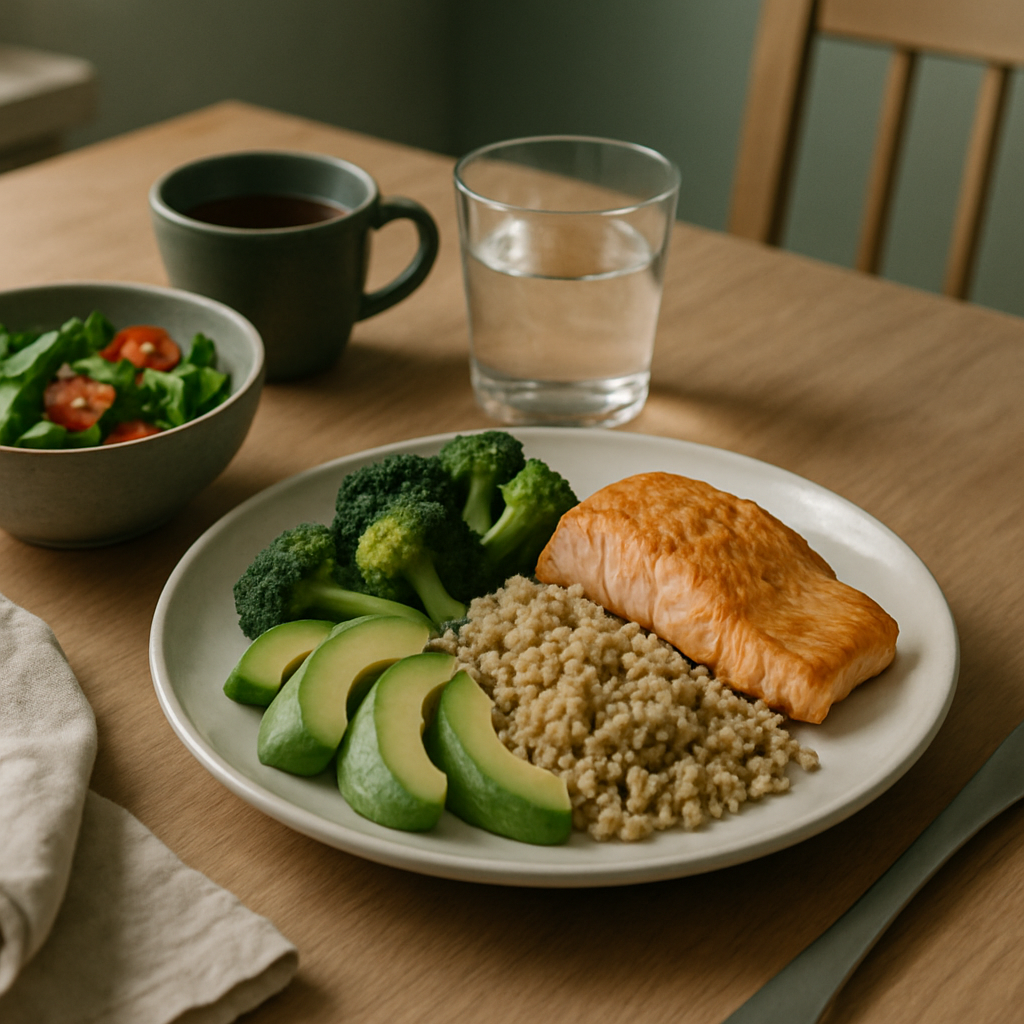
<h3>✅ Prioritize</h3> <ul> <li><strong>Quality proteins:</strong> Eggs, chicken, fish, legumes, tofu</li> <li><strong>Healthy fats:</strong> Avocado, extra virgin olive oil, nuts</li> <li><strong>Leafy greens:</strong> Spinach, kale, broccoli, asparagus</li> <li><strong>Complex carbohydrates:</strong> Brown rice, sweet potato, oats, quinoa</li> <li><strong>Fiber:</strong> Whole fruits, vegetables, chia seeds, flaxseed</li> </ul>
<h3>❌ Avoid</h3> <ul> <li>Ultra-processed foods when breaking the fast</li> <li>Large amounts of refined sugar</li> <li>Very heavy meals all at once (better two moderate meals)</li> <li>Alcohol during the eating window (interferes with autophagy)</li> </ul>
<h2>Intermittent fasting and exercise: are they compatible?</h2>
<p>Yes, but with caveats. Training in a fasted state can enhance fat oxidation but may also affect performance in high-intensity exercise.</p>
<p><strong>Recommendations:</strong></p> <ul> <li><strong>Low-moderate intensity exercise</strong> (walking, yoga, light cardio): Perfectly compatible with fasting.</li> <li><strong>Strength training:</strong> Ideally within the eating window, or right before your first meal to take advantage of post-exercise protein intake.</li> <li><strong>High-intensity exercise</strong> (HIIT, sprints): Better inside the eating window to maintain performance.</li> </ul>
<p>If you train while fasting and notice excessive fatigue, dizziness, or decreased performance, adjust the timings. Training should always complement fasting, not compete with it.</p>
<h2>Common myths about intermittent fasting</h2>
<h3>❌ "Breakfast is the most important meal of the day"</h3> <p>This mantra was popularized largely by the cereal industry. Current evidence doesn't support the idea that skipping breakfast is harmful for healthy people. What matters is the overall quality and quantity of what you eat, not the exact timing.</p>
<h3>❌ "Fasting slows down your metabolism"</h3> <p>Short-term fasts (16–24 hours) can actually <em>increase</em> metabolic rate slightly due to increased norepinephrine. Metabolic slowdown is associated with prolonged, severe calorie restriction, not with properly practiced intermittent fasting.</p>
<h3>❌ "You need to eat every 3 hours to keep your metabolism active"</h3> <p>The thermic effect of food depends on total calories consumed, not meal frequency. Eating 2,000 kcal in 2 meals produces the same overall thermic effect as eating them in 6 meals.</p>
<h3>❌ "Fasting puts you in 'starvation mode'"</h3> <p>The body doesn't switch into energy conservation mode with 16–24 hour fasts. This adaptive response occurs with ongoing severe calorie restriction over weeks, not with structured intermittent fasting.</p>
<h2>What does the most recent science (2025) say?</h2>
<p>The scientific landscape of intermittent fasting continues to evolve. Here are the most relevant findings:</p>
<ul> <li>A perspective article in <em>Frontiers in Nutrition</em> (January 2025) concludes that IF improves lipid profiles and insulin sensitivity, but <strong>is no more effective than continuous calorie restriction</strong> for pure weight loss.</li> <li>A network meta-analysis in <em>PMC</em> (2025) evaluating different IF methods for cardiovascular prevention found results are <strong>"inconclusive"</strong> and higher-quality, longer clinical trials are needed.</li> <li>A study in <em>GeroScience</em> (December 2025) showed that a fasting-mimicking diet increases autophagy markers in humans and reduces myocardial triglycerides in patients with type 2 diabetes.</li> </ul>
<p><strong>The general trend:</strong> Science is moving toward a more nuanced view. Intermittent fasting isn't the miracle cure some promote, but it's also not dangerous for healthy people. It's another tool in the nutritional strategy toolbox, and its main advantage may be ease of adherence for certain people.</p>
<h2>Your action plan: start today</h2>
<p>If you’ve made it this far and want to try it, here’s your checklist:</p>
<ol> <li><strong>Consult your doctor</strong> if you have any medical conditions, are taking medication, or are pregnant.</li> <li><strong>Start with 12:12</strong> for two weeks. No pressure.</li> <li><strong>Hydrate well</strong> during the fast. Water, black coffee, unsweetened tea.</li> <li><strong>Prioritize the quality of your diet</strong> during the eating window. Fasting doesn't make up for a poor diet.</li> <li><strong>Include strength training</strong> to preserve muscle mass.</li> <li><strong>Listen to your body</strong>. If something feels off, stop. There are no medals for suffering.</li> <li><strong>Be flexible</strong>. If a social event doesn’t fit your window, adapt. Consistency matters more than perfection.</li> </ol>
<p>Intermittent fasting isn't magic. It’s a tool that, used correctly and in the right context, can help you improve your metabolic health, simplify your eating, and reconnect with your body’s hunger and satiety signals. The key, as always, is information, prudence, and self-awareness.</p>
<p><em>At Triwell we believe wellness shouldn't be complicated. If you decide to try intermittent fasting, do it with informed intention and listen to your body. And if you need personalized guidance, our AI is here to support you on the journey. 🔺</em></p>