 12 min read
How to naturally reduce anxiety: 10 proven techniques
 Equipo TriwellMarch 5, 202612 min
Anxiety has become the silent companion of millions. According to the World Health Organization, anxiety disorders affect more than 301 million people worldwide, and after the COVID-19 pandemic, cases increased by 25% globally. But here’s something you’re rarely told: you don’t always need pills to manage it.
Don’t get me wrong. Medication has its place, and if a professional has prescribed it, follow their advice. What we’re going to explore here are complementary tools, or in many cases, a first resource for that mild to moderate anxiety that keeps you from fully catching your breath day-to-day.
I’ve compiled ten techniques that have real scientific backing—no magic remedies, no empty promises. Some may surprise you with their simplicity.
## 1. Diaphragmatic Breathing: Your Reset Button
When anxiety strikes, the first thing to go haywire is your breathing. It becomes shallow, quick, chest-focused. Diaphragmatic breathing reverses that pattern by activating the parasympathetic nervous system, which is basically your body’s handbrake.
The 4-7-8 technique, popularized by Dr. Andrew Weil, involves inhaling through your nose for 4 seconds, holding your breath for 7 seconds, and exhaling slowly through your mouth for 8 seconds. A study published in *Frontiers in Psychology* (2017) showed that just 8 weeks of diaphragmatic breathing practice significantly reduced cortisol levels and improved sustained attention.
Best of all? You can do it anywhere. On the subway, before a meeting, in bed when you can’t sleep. Three cycles are enough to feel the effect.
## 2. Regular Physical Activity: The Anti-Anxiety Tool You Already Have
No need to kill yourself at the gym. A meta-analysis published in *JAMA Psychiatry* (2022) reviewing 97 studies concluded that exercise was 1.5 times more effective than medication or cognitive-behavioral therapy in reducing symptoms of anxiety and depression. Yes, you read that right.
The mechanism is multi-faceted: it releases endorphins, regulates cortisol, improves sleep quality, and gets you out of your mental rumination. You don’t need an hour a day. Thirty minutes of brisk walking, five days a week, already makes a measurable difference.
My personal recommendation: if possible, do it outdoors. The combination of movement and nature boosts the effects. A walk in the park isn’t just exercise—it’s sensory therapy.
## 3. Limiting Caffeine and Alcohol: The False Friends
Here’s where many are surprised. That coffee you drink to start your morning could be fueling your anxiety without you realizing it. Caffeine blocks adenosine receptors and increases adrenaline release—the exact opposite of what an anxious brain needs.
A study in the *Journal of Clinical Psychiatry* found that consuming more than 400 mg of caffeine daily (about 4 cups of coffee) was associated with a significant increase in anxiety symptoms. I’m not saying you should quit coffee tomorrow, but consider cutting down to one or two cups before noon.
Alcohol is similar. It seems to relax you at first but alters your sleep architecture and increases rebound anxiety the next day. That phenomenon even has a name: hangxiety.
## 4. Sleep Hygiene: Where Everything Starts and Ends
The relationship between sleep and anxiety is a vicious, unforgiving cycle. Anxiety keeps you awake, and lack of sleep amplifies anxiety. Breaking that cycle is key.
The University of California, Berkeley published a study in *Nature Human Behaviour* showing that a single night of sleep deprivation increased activity in the amygdala—the brain’s fear center—by 60 percent. Sixty percent. From just one night.
What works? Consistent bed and wake times, even on weekends. No screens an hour before bed. A cool room, between 18 and 20 degrees Celsius. And if you wake in the night, don’t look at the clock: anxiety about not sleeping is worse than not sleeping itself.
## 5. Expressive Writing: Empty Your Head Onto the Page
The journaling or expressive writing technique is surprisingly powerful. James Pennebaker, a psychologist at the University of Texas, has researched it for decades. His protocol is simple: write for 15–20 minutes about what’s worrying you, no filters, no correcting, no rereading.
A meta-analysis published in *Psychotherapy and Psychosomatics* confirmed that expressive writing reduced anxiety symptoms and improved psychological well-being. The mechanism seems to be externalization: when you get thoughts out of your head and onto paper, they lose some emotional weight.
I’d add something the scientific literature doesn’t always mention: it doesn’t have to be a pretty journal. A loose piece of paper, your phone’s notes app, a napkin. The important thing is the act of writing, not the medium.
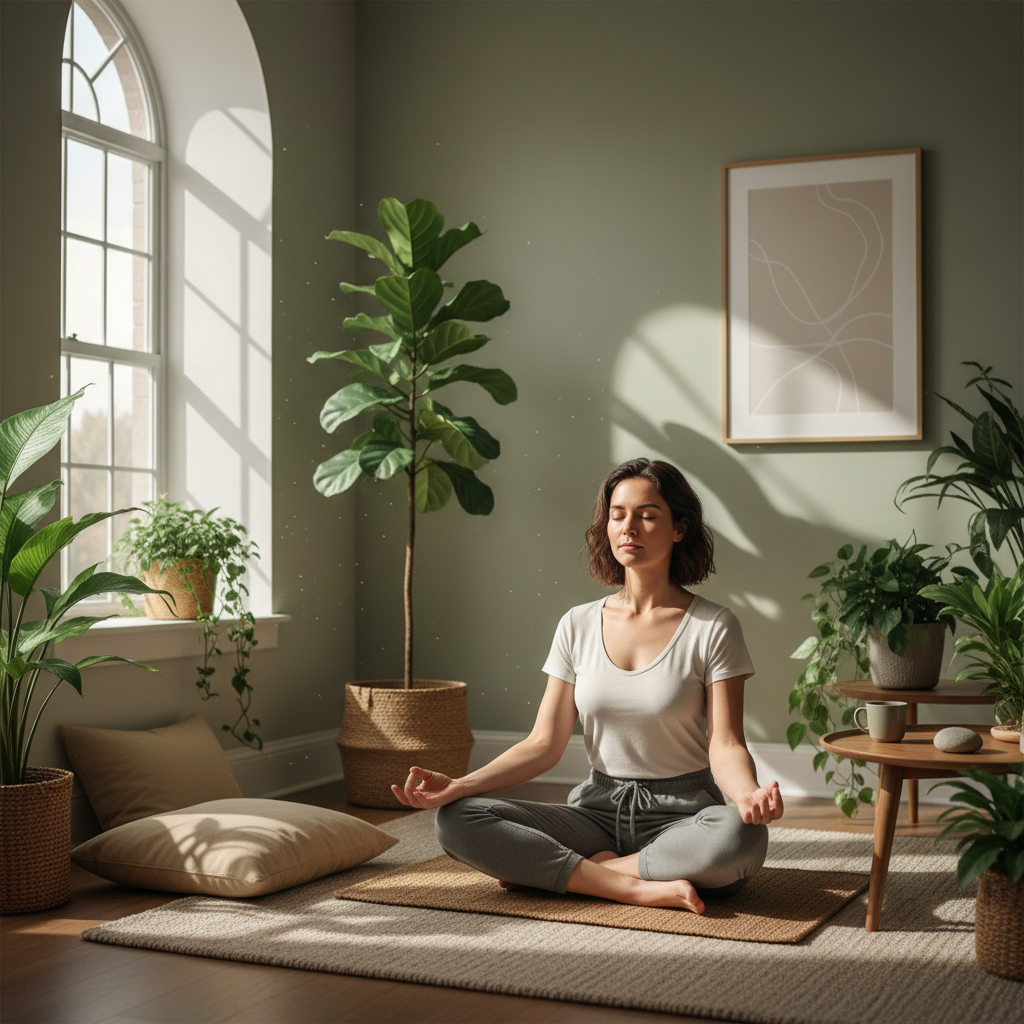
## 6. Mindfulness and Meditation: Training Your Attention
Mindfulness meditation isn’t about emptying your mind or reaching a mystical state. It’s about training your ability to observe your thoughts without getting caught up in them. And for someone with anxiety, that’s transformative.
A meta-analysis by Johns Hopkins University published in *JAMA Internal Medicine* reviewed 47 clinical trials and found that 8 weeks of mindfulness meditation reduced anxiety with a moderate effect size, comparable to antidepressants.
Apps like Headspace or Calm are a good starting point, but you can also start with something simpler: sit for 5 minutes, focus on your breathing, and when your mind wanders (and it will), gently bring it back without judging yourself. That’s it. The muscle strengthens with repetition.
## 7. Social Connection: The Underrated Anxiety Reliever
In an era of digital hyperconnectivity, real-world loneliness is at an all-time high. And chronic loneliness is directly associated with higher levels of anxiety and depression, according to a report from the US Surgeon General published in 2023.
I’m not talking about having hundreds of followers online. I mean genuine connections: a twenty-minute conversation with a friend, a family dinner without phones, a walk with someone who really listens to you.
The oxytocin released during positive social interactions directly counteracts the effects of cortisol. It’s pure biology. If you feel your social network has shrunk, start small: a message, a call, a coffee.
## 8. Anti-Inflammatory Diet: The Gut-Brain Axis
The link between what you eat and how you feel is no longer speculation. The gut-brain axis is well-documented, and 95% of your body’s serotonin is produced in your gut. If you feed it junk, your brain feels it.
A study in *Molecular Psychiatry* found that diets rich in ultra-processed foods were associated with a 33% higher risk of anxiety and depression. On the other hand, the Mediterranean diet—rich in omega-3s, fruits, vegetables, legumes, and nuts—showed a significant protective effect.
You don’t need a total diet overhaul. Start by adding: more oily fish (sardines, salmon, mackerel), more leafy greens, more fermented foods (plain yogurt, kefir, sauerkraut). Your microbiome will thank you, and so will your brain.
## 9. Contact With Nature: Forest Therapy
The Japanese call it *shinrin-yoku*, or forest bathing, and they’ve been studying it for decades. A meta-analysis published in *Environmental Research* showed that spending time in natural environments reduced cortisol, heart rate, and blood pressure—all markers of stress and anxiety.
You don’t need a forest. An urban park, a garden, even having plants at home has measurable effects. A University of Exeter study found that people who spent at least 120 minutes per week in nature reported significantly better levels of wellbeing and mental health.
Two hours a week. You can split it however you want. The effect is cumulative, and it doesn’t matter if it’s short walks or a long excursion.
## 10. Setting Digital Boundaries: The Anxiety Machine in Your Pocket
Your smartphone is an extraordinarily efficient anxiety machine. Constant notifications, social media designed to be addictive, nonstop news cycles designed to trigger your amygdala. A study published in the *Journal of Social and Clinical Psychology* showed that limiting social media use to 30 minutes a day significantly reduced anxiety and feelings of loneliness.
Some practical tips: turn off nonessential notifications, create phone-free times (meals, the first hour of the morning, the last hour of the night), and use your phone’s built-in digital wellbeing tools to monitor screen time.
It’s not about demonizing technology. It’s about you controlling it, not the other way around.
## When to Seek Professional Help
These techniques work for mild to moderate anxiety, but there are lines you shouldn’t cross alone. If anxiety keeps you from working, sleeping, or maintaining relationships; if you have frequent panic attacks; if you’ve started to avoid everyday situations out of fear, it’s time to consult a mental health professional.
A psychologist or psychiatrist isn’t a last resort—they’re a first resource that many people wait too long to use. Cognitive-behavioral therapy is the treatment with the strongest evidence for anxiety disorders, and when combined with these natural techniques, the results are even better.
## Anxiety Doesn’t Define Who You Are
I want to end with something often lost among all these techniques and scientific studies: having anxiety doesn’t mean you’re broken. Your brain is trying to protect you—it’s just doing it too intensely. The goal of these tools isn’t to eliminate anxiety entirely, because a certain level of alertness is necessary and healthy. They aim to bring it down to a manageable level where you can function, enjoy life, and live without fear dictating every decision.
Start with a single technique. The one that feels most accessible to you. Practice it for two weeks before judging whether it works. Consistency is more important than intensity. And if you need help, ask for it. That’s not weakness—it’s the bravest decision you can make.