 21 min read
Anti-inflammatory diet: What to eat and avoid to reduce chronic inflammation
 Equipo TriwellMarch 18, 202621 min
<p>Low-grade chronic inflammation has become one of the biggest silent enemies of our health. Unlike acute inflammation—which is the body’s natural response to injury or infection—chronic inflammation lingers for months or years, causing invisible tissue damage and contributing to the development of cardiovascular disease, type 2 diabetes, obesity, depression, and even certain types of cancer.</p>
<p>The good news is that what you eat has a direct and powerful impact on your body’s inflammation levels. This isn’t about following a restrictive diet or cutting out food groups on a whim: it’s about understanding <strong>which foods activate inflammatory mechanisms and which regulate them</strong>, so you can make smarter choices every day.</p>
<p>In this guide, you’ll discover exactly what to eat, what to avoid, and how to structure your diet so it works in your favor. Everything backed by real science—no fads, no exaggerations.</p>
<h2>What is chronic inflammation and why should you care?</h2>
<p>Your immune system uses inflammation as a defense tool. When you cut your finger, the area turns red, swells, and hurts: that’s acute inflammation doing its job. In a few days, the mission’s complete and everything returns to normal.</p>
<p>The problem arises when this inflammatory response <strong>doesn’t switch off</strong>. Factors like poor diet, sedentary lifestyle, chronic stress, lack of sleep, and exposure to environmental toxins keep the immune system in a permanent state of alert. It’s like your body is fighting a war against an enemy that doesn’t exist.</p>
<p>According to a review published in <em>Nature Medicine</em> (Furman et al., 2019), systemic chronic inflammation is directly associated with the world’s leading causes of death, including heart disease, strokes, cancer, diabetes, and chronic kidney disease. The researchers called it "inflammaging"—a blend of inflammation and aging—because it also accelerates cellular deterioration that comes with age.</p>
<p>The key here is that <strong>diet is one of the most powerful modifiable factors</strong>. A study in the <em>Journal of Internal Medicine</em> (Aleksandrova et al., 2021) demonstrated that dietary patterns can directly modulate inflammatory biomarkers such as C-reactive protein (CRP), interleukin-6 (IL-6), and tumor necrosis factor alpha (TNF-α).</p>
<h2>The pillars of anti-inflammatory eating</h2>
<p>Before we get to food lists, it’s important to understand the principles. Anti-inflammatory eating isn’t a branded “diet” you have to follow to the letter. It’s a <strong>dietary pattern</strong> that shares features with the Mediterranean diet—the model with the strongest scientific evidence for reducing inflammation.</p>
<p>The Spanish Multidisciplinary Society of Pain (SEMDOR) published a ten-point guide on anti-inflammatory diets in 2025 confirming that <strong>the Mediterranean diet is the reference pattern</strong>, with numerous studies supporting its effect on chronic inflammation and pain.</p>
<p>The fundamental principles are:</p>
<ul> <li><strong>Abundance of vegetables and fruit:</strong> the base of every meal</li> <li><strong>Healthy fats take center stage:</strong> extra virgin olive oil, nuts, avocado</li> <li><strong>Quality protein:</strong> fatty fish, legumes, eggs</li> <li><strong>Whole grains:</strong> oats, brown rice, quinoa</li> <li><strong>Herbs and spices:</strong> turmeric, ginger, garlic, oregano</li> <li><strong>Minimize ultra-processed foods:</strong> cut back on anything packaged with endless ingredient lists</li> </ul>
<h2>Anti-inflammatory foods: what to eat (and why it works)</h2>
<h3>1. Fatty fish: pure omega-3</h3>
<p>Salmon, sardines, mackerel, herring, and anchovies are outstanding sources of omega-3 fatty acids (EPA and DHA). These fatty acids are precursors of <strong>resolvins and protectins</strong>: molecules that literally “resolve” inflammation at the cellular level.</p>
<p>A meta-analysis in <em>Atherosclerosis</em> (Kavyani et al., 2020) analyzed 68 clinical trials and concluded that omega-3 supplementation significantly reduces CRP, IL-6, and TNF-α levels. But ideally, get it straight from fish: <strong>2-3 servings per week</strong> is the evidence-based recommendation.</p>
<p><strong>Practical tip:</strong> Canned sardines (in olive oil) are a budget-friendly, convenient, and nutritionally excellent option. You don’t need Norwegian salmon every day.</p>
<h3>2. Extra virgin olive oil: liquid gold</h3>
<p>It’s not a cliché: extra virgin olive oil (EVOO) contains <strong>oleocanthal</strong>, a phenolic compound with anti-inflammatory activity comparable to ibuprofen. A study by Beauchamp et al., published in <em>Nature</em> (2005), first described this effect, and it has since been confirmed in multiple studies.</p>
<p>Additionally, EVOO is rich in polyphenols (hydroxytyrosol, oleuropein) that act as powerful antioxidants and modulate the NF-κB inflammatory pathway. The PREDIMED study—one of the largest trials on the Mediterranean diet—showed that daily EVOO consumption reduces cardiovascular event risk by 30%.</p>
<p><strong>How much:</strong> 3-4 tablespoons per day as your main cooking and dressing fat.</p>
<h3>3. Berries and brightly colored fruits</h3>
<p>Blueberries, raspberries, blackberries, strawberries, cherries, pomegranates... These brightly colored fruits owe their hues to <strong>anthocyanins</strong>, flavonoids with potent antioxidant and anti-inflammatory activity.</p>
<p>A systematic review in <em>Advances in Nutrition</em> (Kimble et al., 2023) showed that regular berry consumption significantly reduces CRP and improves endothelial function. Blueberries in particular have shown positive effects on brain inflammation, linking them to cognitive protection.</p>
<p><strong>Goal:</strong> A handful daily (about 80-100 g). Fresh, frozen, or freeze-dried: all retain their properties well.</p>
<h3>4. Cruciferous and leafy green vegetables</h3>
<p>Broccoli, cauliflower, kale, Brussels sprouts, spinach, chard... This group provides <strong>sulforaphane</strong> (in cruciferous veggies) and an exceptional concentration of anti-inflammatory vitamins, minerals, and phytonutrients.</p>
<p>Sulforaphane activates the Nrf2 transcription factor, which in turn switches on genes that produce your body’s own antioxidant and anti-inflammatory enzymes. It’s like giving your body the tools to defend itself.</p>
<p><strong>Tip:</strong> For maximum sulforaphane from broccoli, chop it and let it rest 5-10 minutes before cooking. This allows the enzyme myrosinase to work before heat inactivates it.</p>
<h3>5. Spices: turmeric, ginger, and cinnamon</h3>
<p>Turmeric contains <strong>curcumin</strong>, possibly the world’s most studied natural anti-inflammatory compound. A meta-analysis by Sahebkar et al. (2016) in <em>Pharmacological Research</em> confirmed that curcumin significantly lowers serum CRP.</p>
<p>The problem: curcumin has low bioavailability. The solution: always combine it with <strong>black pepper</strong> (piperine boosts absorption by 2000%) and a fat source (olive oil, avocado).</p>
<p>Ginger has also been shown to reduce IL-6 and TNF-α in clinical studies, and cinnamon (especially Ceylon cinnamon) has modulating effects on blood sugar and inflammation.</p>
<h3>6. Nuts and seeds</h3>
<p>Walnuts, almonds, flaxseeds, chia seeds, and hemp seeds provide plant-based omega-3 (ALA), vitamin E, magnesium, and polyphenols. Walnuts are stars: the WAHA study (<em>Journal of the American College of Cardiology</em>, 2020) showed that eating 30-60 g of walnuts daily for 2 years significantly reduced inflammatory biomarkers in older adults.</p>
<p><strong>Recommended amount:</strong> A handful per day (30 g), unsalted and not overly roasted.</p>
<h3>7. Legumes</h3>
<p>Lentils, chickpeas, beans, peas... Legumes are underrated anti-inflammatory foods. They’re rich in <strong>prebiotic fiber</strong> that feeds beneficial gut bacteria—and your microbiome health directly impacts systemic inflammation.</p>
<p>A study in <em>Critical Reviews in Food Science and Nutrition</em> (Martini et al., 2024) confirmed that regular legume intake reduces CRP and improves metabolic profiles. They’re also an excellent source of plant protein, iron, and folate.</p>
<p><strong>Ideal frequency:</strong> At least 3-4 times per week.</p>
<h3>8. Green tea</h3>
<p>Green tea contains <strong>epigallocatechin gallate (EGCG)</strong>, a polyphenol with well-documented anti-inflammatory and antioxidant properties. It inhibits the NF-κB pathway and reduces the production of pro-inflammatory cytokines.</p>
<p>2-3 cups per day is the best-supported range according to the scientific literature. Unsweetened, of course.</p>
<h2>Pro-inflammatory foods: what to avoid (or cut back drastically)</h2>
<p>Including the good stuff is just as important as cutting back on what fuels inflammation. This isn’t about demonizing foods or banning them forever, but about being aware of their impact and making informed choices.</p>
<h3>1. Added sugars and high fructose corn syrup</h3>
<p>Excess sugar intake—especially free fructose—directly activates inflammatory pathways. A study in <em>The American Journal of Clinical Nutrition</em> (Jameel et al., 2021) showed that consuming sugary drinks increases CRP, IL-6, and TNF-α even in healthy, normal-weight people.</p>
<p>Main culprits: sodas, industrial juices, pastries, sugary breakfast cereals, commercial sauces (ketchup, BBQ), and many “healthy foods” that hide sugar (flavored yogurts, granola bars, sweetened plant milks).</p>
<p><strong>The WHO recommends:</strong> Fewer than 25 g of added sugar per day (about 6 teaspoons). Most people consume triple that amount without realizing.</p>
<h3>2. Refined vegetable oils high in omega-6</h3>
<p>Refined sunflower, corn, soy, and canola oils are high in linoleic acid (omega-6). While omega-6 is essential, the problem is the <strong>imbalance</strong>: the modern diet has an omega-6:omega-3 ratio of about 15:1, whereas the ideal is between 2:1 and 4:1.</p>
<p>This excess omega-6 gets converted into arachidonic acid, a precursor to pro-inflammatory prostaglandins and leukotrienes. The solution isn’t to eliminate omega-6, but to <strong>rebalance</strong> by increasing omega-3 intake and replacing refined oils with EVOO.</p>
<h3>3. Processed meats</h3>
<p>Deli meats, sausages, bacon, processed ham, cold cuts... The International Agency for Research on Cancer (IARC) has classified processed meats as a <strong>Group 1 carcinogen</strong>. Beyond cancer, they’re pro-inflammatory due to nitrites, poor-quality saturated fats, salt, and compounds formed during processing.</p>
<p>A meta-analysis in <em>Circulation</em> (Micha et al., 2010) found that every daily serving of processed meat increases coronary heart disease risk by 42%. The recommendation is clear: the less, the better.</p>
<h3>4. Artificial trans fats</h3>
<p>Although many countries have regulated or banned them, artificial trans fats (partially hydrogenated oils) still show up in cheap margarines, industrial pastries, fried snacks, and some ultra-processed foods. They are perhaps the <strong>most pro-inflammatory dietary component</strong> that exists.</p>
<p>They raise LDL cholesterol, reduce HDL, increase CRP, and damage vascular endothelium. The FDA removed them from the GRAS ("generally recognized as safe") category in the US, and the WHO has called for their global elimination by 2025.</p>
<p><strong>How to spot them:</strong> Look for "partially hydrogenated oil" or "hydrogenated vegetable fat" on labels.</p>
<h3>5. Refined flours and processed cereals</h3>
<p>White bread, refined pasta, white rice, breakfast cereals... Ultra-processed carbs have a <strong>high glycemic index</strong> that causes blood sugar and insulin spikes. These repeated spikes promote inflammation and insulin resistance.</p>
<p>You don’t need to eliminate carbs: you need to choose whole grains. Whole grains retain the fiber, B vitamins, magnesium, and phytonutrients that refining strips away.</p>
<h3>6. Excess alcohol</h3>
<p>Chronic alcohol intake increases gut permeability (“leaky gut”), allowing bacterial endotoxins (LPS) to enter the bloodstream and trigger systemic inflammatory responses. Even moderate consumption has questionable effects: a 2023 mega-study in <em>The Lancet</em> concluded that there’s no level of alcohol consumption that’s beneficial for overall health.</p>
<h2>A sample day of anti-inflammatory eating</h2>
<p>To make this practical and not just theoretical, here’s what a full anti-inflammatory day could look like:</p>
<p><strong>Breakfast:</strong> Oatmeal cooked with milk (or unsweetened plant drink) + blueberries + walnuts + cinnamon + a teaspoon of chia seeds. Green tea.</p>
<p><strong>Mid-morning:</strong> An apple with a handful of almonds.</p>
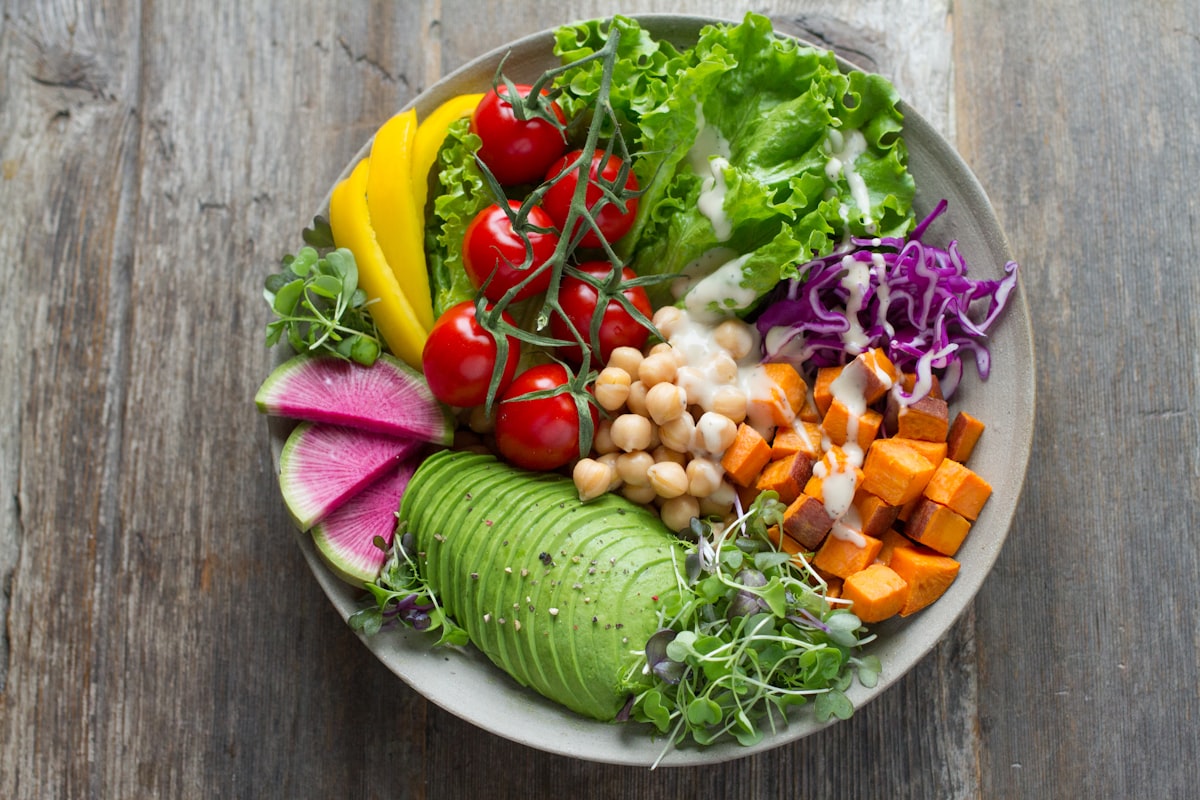
<p><strong>Lunch:</strong> Large spinach, avocado, cherry tomato, and chickpea salad dressed with EVOO and lemon. Grilled sardines. Fruit for dessert.</p>
<p><strong>Afternoon snack:</strong> Carrot and cucumber with homemade hummus.</p>
<p><strong>Dinner:</strong> Broccoli and zucchini soup with turmeric and black pepper. Oven-baked salmon with lemon and dill. A handful of raspberries.</p>
<p>It’s not complicated. It doesn’t require exotic ingredients or a big budget. It’s real, varied, delicious food.</p>
<h2>The gut’s role: the microbiome-inflammation connection</h2>
<p>There’s growing evidence that the <strong>gut microbiome</strong> plays a central role in regulating systemic inflammation. Beneficial gut bacteria produce short-chain fatty acids (butyrate, propionate, acetate) that have direct anti-inflammatory effects and strengthen the gut barrier.</p>
<p>What feeds these beneficial bacteria? Exactly the foods we’ve mentioned: fiber from vegetables, fruits, legumes, and whole grains. What harms them? Ultra-processed foods, sugar, artificial sweeteners, and alcohol.</p>
<p>A landmark study published in <em>Nature Medicine</em> (Asnicar et al., 2021) as part of the ZOE project found that gut microbiome composition is a stronger predictor of inflammatory and cardiometabolic markers than genetic factors. In other words: what you eat matters more than your genes when it comes to controlling inflammation.</p>
<p>Including fermented foods (natural yogurt, kefir, sauerkraut, kimchi, miso) provides probiotics that diversify and strengthen your gut ecosystem. A clinical trial from Stanford University (Sonnenburg et al., 2021) found that a diet rich in fermented foods for 10 weeks increased microbial diversity and lowered 19 inflammatory markers.</p>
<h2>Beyond the plate: factors that amplify or reduce inflammation</h2>
<p>Food is fundamental, but it doesn’t exist in a vacuum. These factors significantly modulate inflammation:</p>
<ul> <li><strong>Sleep:</strong> Getting less than 7 hours raises CRP and IL-6. Restorative sleep is anti-inflammatory by nature.</li> <li><strong>Moderate exercise:</strong> Regular physical activity reduces chronic inflammation. But beware: overtraining without proper recovery can have the opposite effect.</li> <li><strong>Chronic stress:</strong> Persistently high cortisol boosts inflammation. Practices like meditation, mindfulness, and conscious breathing help regulate it.</li> <li><strong>Body weight:</strong> Visceral adipose tissue (belly fat) is an active endocrine organ that secretes pro-inflammatory cytokines. Reducing excess abdominal fat has a direct anti-inflammatory effect.</li> <li><strong>Contact with nature:</strong> Recent studies suggest that spending time outdoors and in natural settings lowers inflammatory biomarkers, possibly by regulating the stress-immunity axis.</li> </ul>
<h2>Common mistakes when trying to eat anti-inflammatory</h2>
<p>Before closing, let’s talk about what many people get wrong when trying this approach:</p>
<p><strong>1. Obsessing over individual superfoods.</strong> No single food will “cure” inflammation. The overall pattern is what matters. Don’t try to make up for an ultra-processed diet with a turmeric smoothie.</p>
<p><strong>2. Eliminating entire food groups without reason.</strong> Unless you have a diagnosed allergy or intolerance, cutting out gluten, dairy, or lectins “just in case” isn’t supported by strong scientific evidence and can unnecessarily impoverish your diet.</p>
<p><strong>3. Spending on supplements before getting the basics right.</strong> Omega-3, turmeric, or vitamin D supplements may have their place, but they never replace a well-planned diet. Food comes first; then—if needed—supplements.</p>
<p><strong>4. Ignoring sleep quality and stress.</strong> You can eat perfectly and still be inflamed if you sleep 5 hours and live stressed. Well-being is holistic.</p>
<p><strong>5. Expecting immediate results.</strong> Reducing chronic inflammation is a gradual process. Studies show improvements in biomarkers after 4-12 weeks of sustained dietary change. Patience and consistency.</p>
<h2>Your action plan: start today</h2>
<p>You don’t need to overhaul your diet overnight. Start with these <strong>5 simple changes</strong> you can make this very week:</p>
<ol> <li><strong>Swap sunflower oil for EVOO</strong> in your cooking and dressings.</li> <li><strong>Add an extra serving of vegetables</strong> to your main meal (a salad, steamed veggies, a soup).</li> <li><strong>Have fatty fish twice this week</strong> (canned sardines count).</li> <li><strong>Swap an ultra-processed snack for nuts</strong> (a handful of walnuts, almonds, or a homemade trail mix).</li> <li><strong>Cut down by one sugary drink per day</strong> and replace it with water, green tea, or herbal tea.</li> </ol>
<p>Every small change counts. And when those 5 become habit, add another 5. That’s how you build a sustainable anti-inflammatory diet: step by step, no drama, no extreme restriction.</p>
<p>Your body has an amazing capacity to regulate and heal itself when given the right tools. An anti-inflammatory diet isn’t a fad: it’s getting back to eating like our grandparents did, with real food, seasonal products, and lovingly prepared meals. And, fortunately, that’s within reach for everyone.</p>