 12 min read
9 science-backed ways to lower cortisol naturally
 Equipo TriwellApril 2, 202612 min
Cortisol has a bad reputation, but the reality is more complex than it seems. This hormone, produced by the adrenal glands, fulfills essential functions: it regulates metabolism, controls inflammation, and keeps us alert to real dangers. The problem isn’t cortisol itself, but when its levels remain chronically elevated.
According to the Spanish Society of Endocrinology and Nutrition (SEEN), chronic stress affects more than 40% of the adult population in Spain. And one of its clearest markers is, precisely, cortisol that doesn’t drop when it should.
I’ve spent years reading studies about hormonal regulation and trying out different strategies. Some truly work. Others are just smoke wrapped in marketing. Here are the ones with solid evidence behind them.
## What Happens When Cortisol Spikes?
Before talking about solutions, it’s worth understanding the problem. Cortisol follows a natural circadian rhythm: it peaks between 6 and 8 a.m. (to wake us up) and then gradually falls until nighttime. When this pattern is disrupted, symptoms appear that many people normalize, not knowing they have a specific hormonal cause:
- Difficulty falling asleep or waking up at 3-4 a.m. - Accumulation of abdominal fat without dietary changes - Disproportionate irritability in everyday situations - Recurring digestive problems (the intestine has cortisol receptors) - Hair loss and thinner or duller skin - Lowered immune system: constant colds
A study published in *Psychoneuroendocrinology* (2020) showed that people with chronically elevated cortisol levels were 30% more likely to develop metabolic syndrome in the following five years. This is no minor issue.
## 1. Diaphragmatic Breathing: The Most Underrated Tool
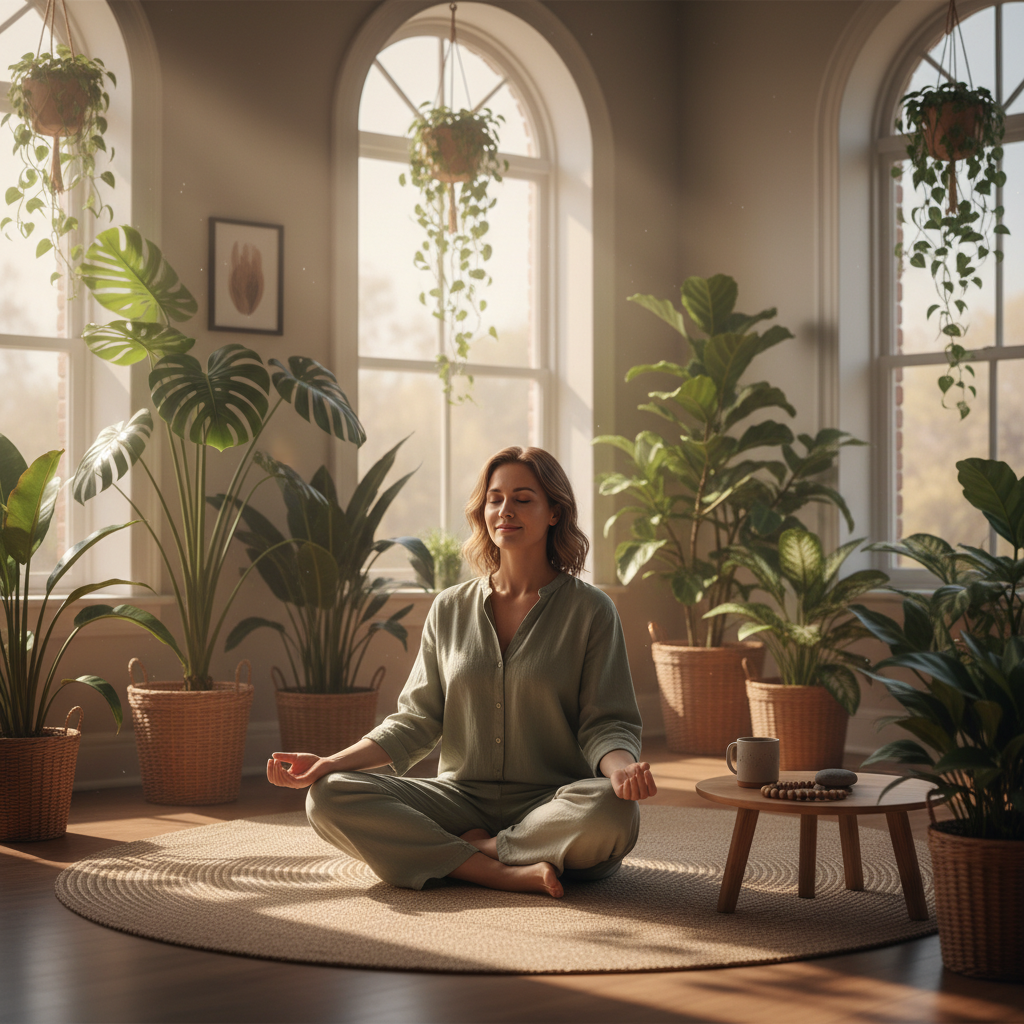
It seems too simple to work, and that's precisely why many people dismiss it. But slow diaphragmatic breathing (4-6 breaths per minute) activates the vagus nerve and measurably reduces cortisol within minutes.
A meta-analysis by Ma et al. (2017) in *Frontiers in Psychology* reviewed 15 controlled studies and found significant reductions in salivary cortisol after just 10-15 minute sessions of mindful breathing.
**How to do it right:** Inhale through your nose for 4 seconds expanding the abdomen (not the chest), hold for 4 seconds, exhale through your mouth for 6 seconds. No app or guide needed. Just a quiet place and five minutes.
What few people mention: consistency matters more than duration. Three 5-minute sessions spread throughout the day are more effective than one 20-minute session, because they train your nervous system to shift gears more easily.
## 2. Low-Intensity Movement (It's Not All About HIIT)
There’s a paradox with exercise and cortisol: intense exercise *increases* cortisol in the short term. For someone whose levels are already high, pushing hard in the gym can backfire.
What works best to lower chronic cortisol is moderate- to low-intensity movement: brisk walking, swimming, yoga, leisurely bike riding. A University of Nottingham study (2019) showed that 30 minutes of walking in a natural environment reduced cortisol 14% more than the same walk on an indoor treadmill.
**Surprising fact:** Tai chi, often seen as an exercise for the elderly, has shown in multiple studies cortisol reductions comparable to formal meditation. A systematic review in the *Journal of Evidence-Based Integrative Medicine* (2018) confirms this with data from 18 clinical trials.
## 3. Good Sleep Isn’t a Luxury, It’s a Hormonal Necessity
Sleep is the master regulator of cortisol. During deep sleep (NREM stages 3 and 4), the hypothalamic-pituitary-adrenal axis recalibrates. If you don’t get enough deep sleep, your next morning’s cortisol will be higher than normal, creating a vicious cycle.
Strategies that really work to improve sleep quality (not the typical ones you already know):
- **Bedroom temperature between 18-20°C.** A Stanford University study showed that lowering body temperature is one of the strongest triggers for deep sleep. - **Exposure to bright natural light in the morning.** Dr. Andrew Huberman, a Stanford neuroscientist, stresses this: 10-15 minutes of direct sunlight within the first two hours of the day calibrates your circadian clock better than any melatonin supplement. - **Eat dinner at least 3 hours before bed.** Not for weight reasons, but because digestion raises body temperature and interferes with melatonin production.
## 4. Adaptogens: Which Work and Which Don’t
The world of adaptogens is full of exaggerated promises, but some have solid evidence for reducing cortisol:
**Ashwagandha (Withania somnifera):** Probably the most studied adaptogen. A double-blind clinical trial published in the *Indian Journal of Psychological Medicine* (2012) showed a 28% reduction in serum cortisol levels after 60 days of supplementation with standardized extract (300 mg, twice daily).
**Rhodiola rosea:** Works especially well for stress-related fatigue. A study in *Phytomedicine* (2012) showed improvements in burnout symptoms and reduced cortisol after 28 days.
**What DOES NOT have enough evidence:** Reishi, maca, and many other adaptogens sold as miracle cures. I’m not saying they don’t work, but the human evidence specifically for cortisol is weak or non-existent.
**Important:** Adaptogens do not replace lifestyle changes. Taking ashwagandha while maintaining an unsustainable pace of life is like putting a band-aid on a fracture.
## 5. Anti-Inflammatory Diet: Your Food Directly Affects Cortisol
Low-grade systemic inflammation and high cortisol feed each other. A pro-inflammatory diet (ultra-processed foods, refined sugars, trans fats) keeps cortisol elevated. An anti-inflammatory diet helps break that cycle.
Foods proven to help regulate cortisol:
- **Dark chocolate (>70% cocoa):** A study in the *Journal of Proteome Research* (2009) showed that 40 g of dark chocolate daily for 2 weeks significantly reduced urinary cortisol levels. - **Fatty fish (omega-3):** A review in *Molecular Psychiatry* (2021) confirmed that omega-3 supplementation reduced cortisol and anxiety in stressed populations. - **Fermented foods:** The gut-brain axis is real. Probiotics, especially *Lactobacillus* and *Bifidobacterium* strains, modulate the stress response. - **Green tea:** The L-theanine it contains promotes alpha brain waves, associated with relaxation without drowsiness.
**What you should avoid if your cortisol is high:** Coffee after 2:00 p.m. (caffeine raises cortisol and has a half-life of 5-6 hours), alcohol (while relaxing short-term, it fragments sleep and raises nighttime cortisol), and excess refined sugar.
## 6. Genuine Social Contact: The Bonding Hormone vs. Cortisol
Oxytocin, released during positive social interactions, acts as a natural antagonist to cortisol. I’m not talking about social media—which, paradoxically, can increase cortisol due to social comparison—but real contact.
A hug of over 20 seconds with someone you trust, a deep conversation, playing with a pet... all of this releases oxytocin and measurably reduces cortisol. A Carnegie Mellon University study (2014) showed that people who received frequent hugs had significantly lower cortisol levels and were 32% less likely to get sick after exposure to cold viruses.
We are living in a loneliness epidemic that no one connects with the stress epidemic. And they are deeply related.
## 7. Nature: The Side-Effect-Free Anxiolytic
The Japanese have spent decades studying *shinrin-yoku* (forest bathing). The evidence is solid: spending time in natural environments reduces cortisol, blood pressure, and heart rate.
A study published in *Environmental Health and Preventive Medicine* (2010) measured salivary cortisol in participants who walked 20 minutes in a forest versus those who strolled through an urban area. The forest group had cortisol levels 16% lower.
You don’t need a forest. A park, a garden, even having plants at home helps. Biophilia is real: our brain responds positively to natural stimuli because, evolutionarily, we are designed to live surrounded by nature, not concrete.
## 8. Reducing Digital Overstimulation
Every mobile notification triggers a microdose of cortisol. Individually it’s insignificant. But if you receive 80-120 notifications per day (the average in Spain according to Ofcom data), the cumulative effect is substantial.
Strategies that work: - **Turn off non-essential notifications.** Leave only calls, direct messages, and what truly needs your immediate attention. - **Set specific review windows.** Check email 3 times a day at set hours instead of having it constantly alerting you. - **One hour without screens before bed.** Blue light suppresses melatonin, but stimulating content (news, social media) also keeps the alert system active.
It’s not about being a Luddite. It’s about using technology in a way that serves your well-being instead of sabotaging it.
## 9. Herbal Teas and Medicinal Plants with Evidence
Beyond adaptogen supplements, some infusions have evidence for reducing cortisol:
- **Chamomile:** A study in *Molecular Medicine Reports* (2010) showed that chamomile’s apigenin binds to GABA receptors, promoting relaxation and reducing cortisol. - **Passionflower:** Especially effective for nighttime anxiety. A clinical trial compared passionflower with oxazepam (a benzodiazepine) and found similar efficacy for anxiety, without the side effects. - **Valerian:** Better known for sleep, but it also affects cortisol by improving deep sleep.
**My personal recommendation:** A chamomile tea with a teaspoon of raw honey and a bit of ginger, taken an hour before bed. It’s not magic, but as part of a nighttime wind-down ritual, it works surprisingly well.
## The Approach That Really Works
If I had to choose only three things from this list for someone just starting out, it would be: diaphragmatic breathing three times a day, a 30-minute outdoor walk, and always going to bed at the same time. No supplements, no apps, no complications.
Elevated cortisol isn’t reduced by a quick hack. It’s reduced by building a lifestyle that consistently tells your body you’re safe. Because that’s what cortisol measures: whether you’re in danger or not. And in the modern world, most of the dangers we perceive aren’t real. They’re unanswered emails, impossible deadlines, and the pressure to be constantly available.
Lowering cortisol, at its core, is about learning to live in a way that your biology can sustain. And that’s not achieved with a magic pill, but with small choices, repeated every day.